


 English
 русский
Content
What Is an Evaporative Air Cooler?
An evaporative air cooler — often called a swamp cooler or evap cooler — is a cooling appliance that lowers air temperature by passing warm air over or through a water-saturated pad, causing the water to evaporate and absorb heat from the airstream. The cooled, humidified air is then circulated into the room by a fan. No refrigerant, compressor, or condenser is involved — the entire process relies on the thermodynamic principle of evaporative heat absorption.
The physics behind it is straightforward: when liquid water evaporates, it requires energy — approximately 2,260 joules per gram — which it draws from the surrounding air, reducing the air temperature in the process. The same principle explains why sweating cools the human body, and why stepping out of a swimming pool on a breezy day feels noticeably cold.
Main Components
A typical evaporative cooler consists of four core components working together:
- Water reservoir — stores the water supply, either filled manually or connected to a continuous water line in larger units
- Cooling pads (media) — absorbent pads made from cellulose, synthetic fiber, or rigid plastics that hold water and maximize the surface area exposed to airflow; thicker, denser pads achieve greater evaporation efficiency
- Water pump — continuously circulates water from the reservoir over the cooling pads to keep them saturated
- Fan and motor — draws outside or indoor air through the wet pads and pushes the cooled air into the space
Some units include additional features such as adjustable louvers, multi-speed fan settings, humidity controls, and programmable timers. Direct evaporative coolers — the most common type — add moisture to the output air. Indirect evaporative coolers use a heat exchanger to cool air without increasing its humidity, though they are more complex and typically more expensive.
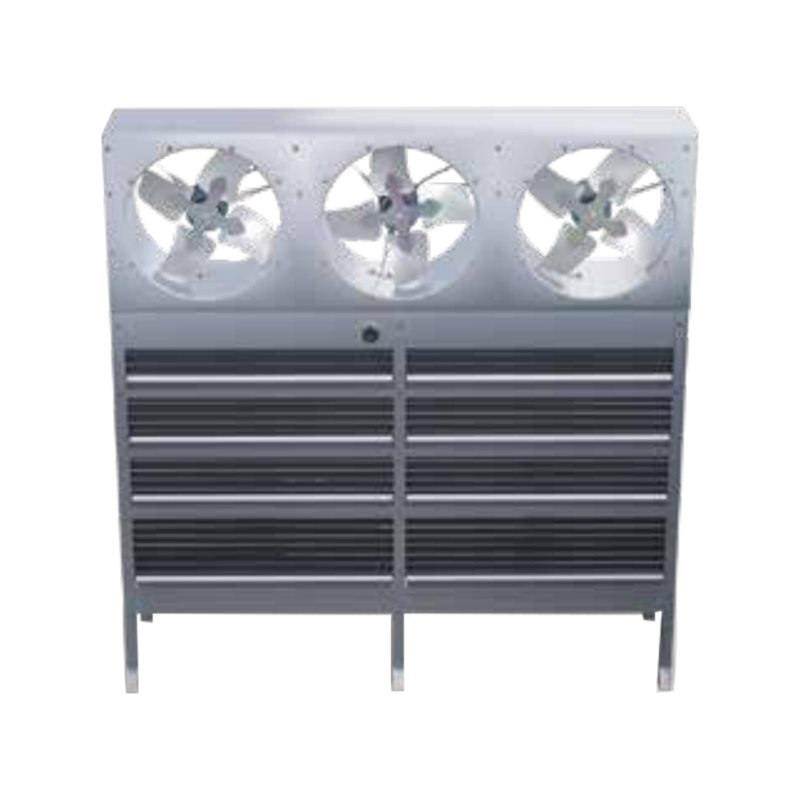
What Is an Evap Cooler Best Suited For?
The effectiveness of an evap cooler depends almost entirely on the ambient humidity of the environment where it is used. Evaporative cooling works on a simple principle: the drier the incoming air, the more water it can absorb, and the greater the temperature drop achieved. In practice, this means:
- Below 30% relative humidity — evap coolers perform exceptionally well, delivering outlet air temperatures 10–15°C below the ambient dry-bulb temperature in optimal desert conditions. Regions such as the American Southwest, the Middle East, North Africa, Central Asia, and inland Australia are prime markets for this reason.
- 30–60% relative humidity — moderate effectiveness; the cooler still reduces temperature meaningfully but adds noticeable humidity to the space, which may or may not be desirable depending on occupant comfort preferences.
- Above 60% relative humidity — limited effectiveness; the air is already carrying significant moisture and cannot absorb much additional water vapor. Temperature reductions are marginal and the added humidity can make the environment feel stickier rather than cooler.
Evap coolers also perform best in well-ventilated spaces. Unlike air conditioners, which recirculate and cool sealed indoor air, evaporative coolers require a continuous supply of fresh outdoor air and an outlet — an open window or door — to allow the humidified air to escape. Running an evap cooler in a tightly sealed room causes humidity to build up rapidly, diminishing cooling performance and creating a clammy indoor environment.
Evaporative Cooler vs Portable Air Conditioner: A Direct Comparison
Evaporative coolers and portable air conditioners are both marketed as flexible, room-by-room cooling solutions, but they operate on fundamentally different principles and suit different environments and use cases. Choosing the wrong one for a given climate or application is one of the most common — and costly — mistakes buyers make.
| Factor | Evaporative Cooler | Portable Air Conditioner |
|---|---|---|
| Cooling Method | Evaporation of water | Refrigerant-based vapour compression |
| Best Climate | Hot and dry (<50% RH) | Any climate, incl. humid |
| Energy Consumption | 100–250W (fan + pump only) | 900–1,800W (compressor load) |
| Effect on Humidity | Increases indoor humidity | Removes humidity (dehumidifies) |
| Ventilation Needed | Yes — open window or door required | Exhaust hose only; works in sealed rooms |
| Refrigerant / Compressor | None | Yes |
| Purchase Price (typical) | $50–$300 | $300–$800+ |
| Maintenance | Pad cleaning/replacement, reservoir cleaning | Filter cleaning, condensate drain or tank emptying |
| Noise Level | Low (fan noise only) | Moderate to high (compressor + fan) |
Energy Cost: The Most Significant Long-Term Difference
The energy gap between the two technologies is substantial. A mid-range evaporative cooler draws around 150–200 watts, while a comparable portable air conditioner running at the same cooling output consumes 1,200–1,500 watts. Over a summer cooling season of 90 days at 8 hours per day, this difference amounts to roughly 800–1,000 kWh — a meaningful operating cost advantage for the evaporative cooler in climates where it performs well.
When a Portable Air Conditioner Is the Right Choice
Portable air conditioners are the appropriate choice when the installation environment has high ambient humidity, when the space is sealed (a server room, a sleeping area with closed windows at night), or when precise temperature control regardless of outdoor conditions is required. They also dehumidify as they cool, which makes them preferable in tropical, coastal, and monsoon climates where humidity is the primary comfort problem rather than temperature alone.
When an Evaporative Cooler Is the Right Choice
Evaporative coolers are the superior choice in hot, dry climates where relative humidity regularly stays below 50%. They are also strongly preferred for open or semi-open environments — workshops, warehouses, patios, loading docks, and outdoor event spaces — where an air conditioner cannot maintain a sealed space and would waste energy conditioning air that immediately escapes. Their lower purchase price, minimal maintenance requirements, and absence of refrigerant also make them the preferred option for buyers seeking a low-complexity, low-operating-cost cooling solution.
Maintenance, Sizing, and Buying Considerations
Evaporative coolers require more active seasonal maintenance than air conditioners, primarily because stagnant water in the reservoir and on the pads can promote mineral scale buildup and microbial growth. Key maintenance tasks include:
- Pad replacement — cellulose pads typically last one to three seasons depending on water hardness and usage intensity; synthetic and rigid media pads last longer but must be cleaned regularly
- Reservoir cleaning — draining and wiping down the tank monthly during the cooling season prevents mineral deposits and algae; some units include a continuous bleed-off or drain valve to reduce mineral accumulation
- End-of-season winterization — draining all water, removing and storing or replacing pads, and covering the unit prevents freeze damage and extends service life in cold-climate regions
For sizing, evaporative coolers are rated by airflow in cubic feet per minute (CFM) or cubic meters per hour (m³/h). A common rule of thumb is to select a unit capable of replacing the room's air volume every 1.5 to 2 minutes. For a 50 m² room with 2.5 m ceilings (125 m³ volume), this suggests a unit rated at approximately 4,000–5,000 m³/h. Undersizing is the most frequent error buyers make — an evap cooler running at its limits in a space too large for its airflow capacity will not achieve meaningful temperature reduction even in ideal humidity conditions.
When evaluating products, buyers should look beyond price and check for IP-rated enclosures if the unit will be used in dusty or outdoor environments, the availability of replacement pads from the manufacturer, and whether the pump includes a corrosion-resistant housing — a detail that meaningfully affects long-term reliability in areas with hard or mineral-rich water.