


 English
 русский
An evaporative air cooler, commonly called a swamp cooler, is highly effective in hot, dry climates where humidity falls below 50 percent. Under optimal conditions with outdoor humidity around 10 to 20 percent, a quality unit can lower perceived room temperature by 5 to 15 degrees Fahrenheit. However, these devices always add moisture to the air as a core part of their cooling mechanism. This means they perform poorly in humid climates, can promote mold growth if ventilation is inadequate, and should never be used as a winter humidifier without understanding the risks of condensation and structural dampness. The direct answer is that an evaporative cooler is a powerful, energy-efficient alternative to fans and air conditioning in the right environment, but it demands proper sizing, maintenance, and climate awareness to avoid moisture-related problems.
Content
- 1 How an Evaporative Air Cooler Works
- 2 How Well Evaporative Air Coolers Perform
- 3 Evaporative Air Cooler Versus a Fan
- 4 Evaporative Cooler Sizing Guide
- 5 Do Swamp Coolers Add Moisture to Air in Winter
- 6 Can Swamp Coolers Cause Mold
- 7 Using an Evaporative Air Cooler in a Humid Climate
- 8 Practical Maintenance for Long-Term Performance
How an Evaporative Air Cooler Works
The principle behind an evaporative air cooler is simple yet powerful. The unit pulls warm outside air through water-saturated cooling pads using a fan. As the hot air passes through these wet pads, water absorbs heat energy from the air and evaporates, transforming from liquid to vapor. This phase change extracts thermal energy, and the resulting air blown into the room is significantly cooler and slightly more humid.
The entire process relies on a pump that circulates water from a reservoir over the cooling media, keeping the pads continuously soaked. Unlike an air conditioner that recirculates stale indoor air in a sealed room, an evaporative cooler works best with open windows or doors to create a constant flow of fresh, cooled air while pushing warm, humid air out. This continuous air exchange is what distinguishes it from a simple fan and also why ventilation is critical for preventing mold.
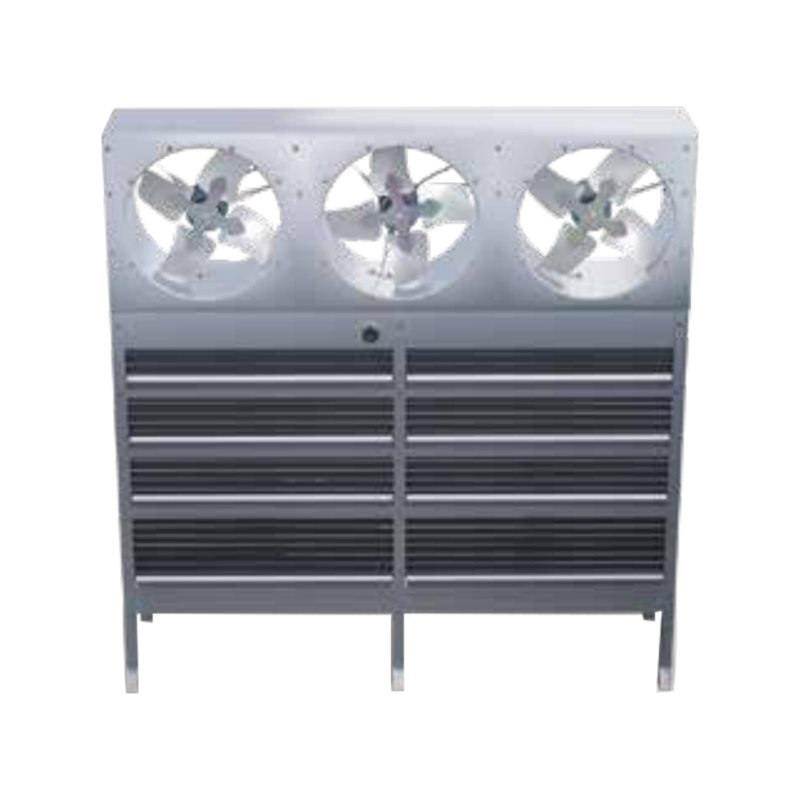
How Well Evaporative Air Coolers Perform
Performance hinges entirely on the difference between the outdoor temperature and the wet-bulb temperature. On a 95 degree Fahrenheit day with 15 percent relative humidity, an efficient evaporative cooler can deliver air at approximately 70 to 74 degrees Fahrenheit. The same unit on an 85 degree day with 70 percent humidity might only drop the output temperature by 2 to 4 degrees, making it feel little better than a fan.
Real-world data from arid regions like Arizona and Nevada shows that homeowners using properly sized evaporative coolers report indoor temperatures between 72 and 78 degrees Fahrenheit during peak summer heat exceeding 100 degrees outdoors. The key metric is saturation efficiency, which for quality units ranges from 80 to 90 percent. This means the cooler achieves 80 to 90 percent of the maximum theoretical temperature drop possible through evaporation.
Evaporative Air Cooler Versus a Fan
A common misconception is that an evaporative cooler and a fan serve the same purpose. A fan simply moves existing air across the skin, accelerating sweat evaporation to create a cooling sensation on the body, but it does not lower the air temperature in the room. An evaporative cooler actively reduces the temperature of the air itself through water evaporation. The table below clarifies the core differences.
| Feature | Evaporative Air Cooler | Standard Fan |
|---|---|---|
| Air Temperature | Reduces by 5 to 15 degrees F | No reduction |
| Moisture Added | Yes, increases humidity | None |
| Energy Use | 100 to 300 watts typical | 25 to 100 watts typical |
| Best Climate | Below 50 percent humidity | Any climate |
Evaporative Cooler Sizing Guide
Choosing the right size is the single most critical factor for performance. An undersized unit will fail to cool adequately, while an oversized unit can oversaturate the air with moisture before achieving comfortable temperatures. Sizing is measured in cubic feet per minute of airflow, which determines how many complete air exchanges the cooler can perform per hour. Industry guidelines recommend 20 to 40 air changes per hour for living spaces, with the higher end suited for very hot, dry regions.
To calculate your required CFM, multiply the room volume in cubic feet by the desired air changes per hour, then divide by 60. The table below offers a practical reference for common room sizes assuming a target of 30 air changes per hour and an 8-foot ceiling height.
| Room Area sq ft | Room Volume cu ft | Recommended CFM |
|---|---|---|
| 150 | 1,200 | 600 to 800 |
| 300 | 2,400 | 1,200 to 1,600 |
| 500 | 4,000 | 2,000 to 2,600 |
| 1,000 | 8,000 | 4,000 to 5,200 |
Do Swamp Coolers Add Moisture to Air in Winter
Yes, evaporative coolers inherently add moisture whenever they operate, and this holds true in winter just as in summer. Some homeowners in arid regions consider running only the pump and fan without cooling intent, effectively using the unit as a makeshift humidifier during dry winter months. While this can raise indoor humidity from a parched 10 to 15 percent to a more comfortable 30 to 40 percent, it carries serious risks.
In winter, warm indoor air meeting cold wall surfaces can already cause condensation. Adding more moisture through a swamp cooler without careful humidity monitoring can quickly push indoor relative humidity above 50 to 60 percent, which is the threshold where condensation on windows, wall cavities, and uninsulated surfaces becomes likely. Persistent dampness in these areas invites mold. If you choose to use a cooler for winter humidification, you must use a hygrometer to keep humidity below 45 percent and inspect window sills and exterior walls regularly for moisture accumulation.
Can Swamp Coolers Cause Mold
Swamp coolers can absolutely cause or contribute to mold problems when operated incorrectly or poorly maintained. The risk originates from two sources: the internal water system and the humidified indoor environment.
Internal Mold Growth
The water reservoir, pump, and cooling pads create a dark, damp environment ideal for mold, algae, and bacteria. Without regular cleaning, these microorganisms colonize the pads and get blown directly into the living space along with the cooled air. Studies on poorly maintained units have detected elevated airborne mold spore counts in homes using neglected evaporative coolers compared to homes without them.
Environmental Mold Risk
If the cooler runs in a tightly sealed room or in a climate where humidity already exceeds 50 percent, the added moisture has no escape route. Indoor relative humidity climbing above 60 percent creates conditions where mold can germinate on drywall, upholstery, carpet, and wood surfaces within 24 to 48 hours. The following prevention measures are essential.
- Drain and clean the water reservoir at least once per week during active use.
- Replace cooling pads at the start of every cooling season, or sooner if they show dark spots or odor.
- Keep at least two windows partially open to ensure continuous airflow and moisture escape.
- Use a hygrometer and stop operating the cooler if indoor humidity exceeds 55 percent.
- Add a bacteriostatic treatment tablet to the water reservoir to inhibit microbial growth.
Using an Evaporative Air Cooler in a Humid Climate
An evaporative air cooler in a humid climate is largely ineffective and often counterproductive. When the outdoor air already holds substantial moisture, water from the cooling pads cannot evaporate efficiently because the air is near its saturation point. The result is a negligible temperature drop combined with a further increase in indoor humidity, leaving the space feeling sticky and warmer rather than cooler.
As a practical guideline, evaporative cooling becomes noticeably less effective above 40 to 50 percent relative humidity and nearly useless above 60 percent. In regions such as the southeastern United States, coastal tropical areas, or anywhere with frequent summer dew points above 60 degrees Fahrenheit, a traditional air conditioner or a high-velocity fan provides far better comfort. For those in borderline semi-arid climates where summer humidity occasionally spikes, a hybrid approach using the cooler during dry morning hours and switching to fans during humid afternoons can still yield energy savings.
Practical Maintenance for Long-Term Performance
Beyond mold prevention, consistent maintenance directly impacts cooling efficiency. Mineral deposits from hard water accumulate on cooling pads, reducing their ability to absorb and evaporate water. Pads coated with scale can see efficiency drops of 20 to 30 percent. A seasonal maintenance routine should include the following steps.
- Flush the water system with a cleaning solution at the start and end of each cooling season.
- Inspect the water pump for debris and ensure even water distribution across all pads.
- Check the fan belt tension and motor lubrication if using a belt-driven unit.
- Seal the unit and close its outdoor vent during winter to prevent cold drafts and heat loss.
- Test the float valve to ensure proper water level without overflow.
A well-maintained evaporative cooler can deliver 10 to 15 years of reliable service while consuming up to 75 percent less electricity than a comparable central air conditioning system, making it a cost-effective choice for the right climate and a well-informed user.