


 English
 русский
Content
Evaporative Air Cooler: How It Works and Where It Fits
An evaporative air cooler, sometimes called a swamp cooler, lowers air temperature using a fundamentally different process than a conventional refrigerant-based air conditioner: it pulls warm, dry air through water-saturated cooling pads, and as the water evaporates, it absorbs heat directly from the air passing through, producing a stream of cooler, more humid air on the other side. Because this process relies purely on evaporation rather than a mechanical refrigeration cycle, evaporative air coolers use dramatically less electricity than compressor-based cooling, often a fraction of the power draw of an equivalent-capacity air conditioner.
That efficiency advantage comes with an important limitation: evaporative cooling performance depends heavily on ambient humidity. In hot, dry climates, evaporative air coolers can drop air temperature significantly and comfortably, which is why they remain a dominant cooling technology across arid and semi-arid regions worldwide. In humid climates, the air is already closer to saturation, leaving little capacity for additional evaporation, which sharply reduces cooling effectiveness and is the main reason evaporative coolers are climate-dependent rather than a universal air conditioning replacement.
How an Evaporative Air Cooler Actually Works
The core mechanism inside every evaporative air cooler is the wetted cooling pad, typically made from cellulose, aspen wood fiber, or specialized honeycomb-structured media designed to maximize the surface area of water exposed to passing air. A small water pump continuously wets these pads from a reservoir at the base of the unit, while a fan draws hot outside or indoor air through the saturated pad material, and as air passes through, water evaporates from the pad surface, drawing latent heat from the air in the process and lowering its temperature before it's pushed out into the space being cooled.
This evaporation-driven heat exchange means an evaporative air cooler doesn't just cool the air, it also adds moisture to it, which is an intentional and often desirable side effect in dry climates where indoor air can otherwise become uncomfortably arid, particularly during hot summer months. In industrial and commercial applications, this humidification effect is sometimes leveraged deliberately, such as in textile manufacturing or certain agricultural settings where maintaining elevated humidity alongside lower temperature improves process conditions or product quality.
Because evaporative coolers work by introducing fresh, treated outside air rather than recirculating and refrigerating the same indoor air, they also continuously ventilate the space, which is a meaningful advantage in facilities where indoor air quality and fresh air exchange matter, such as large warehouses, workshops, and agricultural buildings, compared to sealed refrigerant-based systems that don't inherently provide the same air turnover.
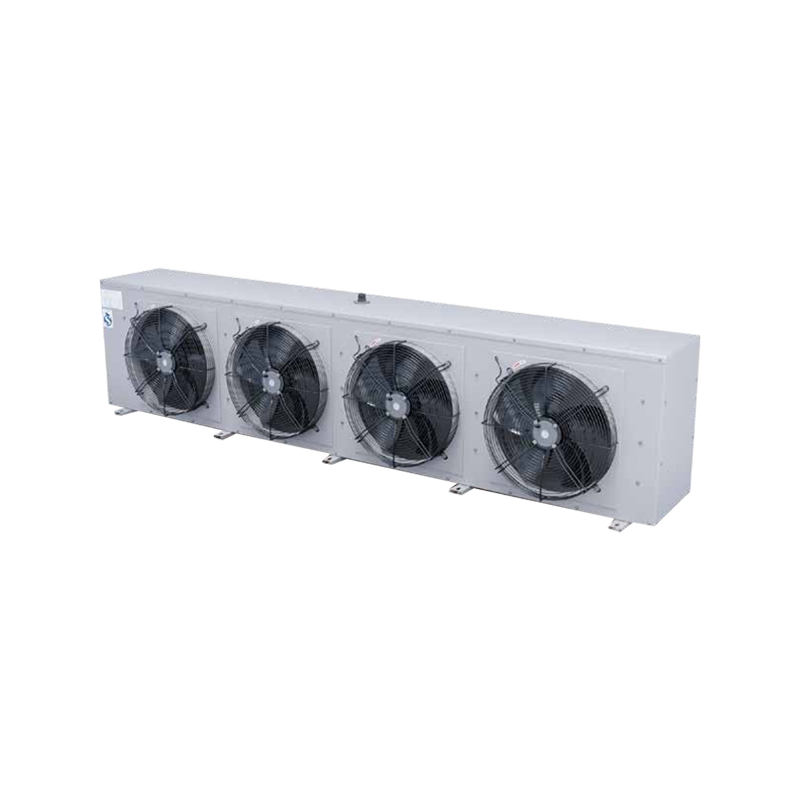
Where Evaporative Air Coolers Make the Most Sense
Evaporative air coolers perform best in hot, dry climates with relative humidity generally below 50 to 60 percent, which is why they remain the dominant cooling method across large parts of the American Southwest, the Middle East, North Africa, and other arid regions with high daytime temperatures and low ambient moisture. In these environments, an evaporative cooler can often achieve a 20 to 30 degree Fahrenheit temperature drop between incoming and outgoing air, delivering comfortable cooling at a fraction of the electricity consumption of compressor-based air conditioning.
Large open industrial spaces are a particularly strong fit for evaporative cooling technology, since factories, warehouses, workshops, and agricultural buildings often have high ceilings, significant heat loads from equipment or livestock, and frequent door openings that make maintaining a sealed, fully air-conditioned environment both impractical and expensive. Evaporative air coolers handle these open, high-volume spaces well, since their continuous fresh-air ventilation approach doesn't rely on maintaining a tightly sealed building envelope the way refrigerant-based cooling does.
Evaporative cooling is generally a poor fit for humid coastal regions, tightly sealed office environments requiring precise humidity control, or any application where moisture-sensitive equipment or inventory is present, since the added humidity that comes with evaporative cooling can be actively harmful in those settings. Facilities in borderline or seasonally variable climates sometimes pair evaporative cooling with supplemental dehumidification or hybrid systems to manage performance during the more humid months of the year.
Sizing and Selecting an Evaporative Air Cooler
Correctly sizing an evaporative air cooler starts with calculating the required airflow, typically expressed in cubic feet per minute, based on the volume of the space and the desired number of air changes per hour, since evaporative cooling depends on a continuous, sufficient volume of air moving through the wetted pads rather than simply matching a tonnage rating the way refrigerant-based systems are sized. Undersized units struggle to achieve meaningful temperature drop in larger spaces, while oversized units waste energy and water without a proportional gain in comfort.
Cooling pad material and thickness materially affect both cooling performance and maintenance requirements, with thicker, higher-quality honeycomb pads generally delivering better cooling efficiency and longer service life than thin, basic cellulose pads, though at a higher upfront cost. Water quality also plays a significant role in pad longevity, since hard water accelerates mineral scale buildup on the pad surface, reducing its evaporative surface area over time and requiring more frequent pad replacement in areas with high water hardness.
For industrial and commercial installations, integrating the evaporative cooler with the building's ventilation design, including exhaust airflow to allow the cooled, humidified air to properly circulate and exit the space, is essential to achieving the expected performance, since a cooler pushing air into a sealed space with inadequate exhaust will quickly saturate the indoor air and lose its cooling effectiveness. Working with a supplier experienced in evaporative cooling system design, rather than treating the cooler as a standalone appliance, generally produces a far better outcome for larger commercial and industrial installations.