


 English
 русский
Content
Industrial Refrigeration Equipment: An Overview for Buyers and Engineers
Industrial refrigeration equipment covers the large-scale systems used to remove heat from process environments, storage spaces, and production lines at a scale far beyond commercial or residential refrigeration. Rather than a single machine, industrial refrigeration is typically a full system built around compressors, condensers, evaporators, and a refrigerant circulation loop, engineered and sized specifically for the thermal load, temperature range, and duty cycle of the facility it serves. Food processing plants, cold storage warehouses, chemical and pharmaceutical manufacturing, breweries, and large-scale HVAC installations all rely on industrial refrigeration equipment sized and configured very differently from one another, even though the underlying refrigeration cycle is the same.
What separates industrial-grade equipment from smaller commercial refrigeration units is primarily capacity, redundancy, and control sophistication. Industrial systems are engineered to run continuously for years with minimal unplanned downtime, often incorporating multiple compressors, redundant control systems, and monitoring instrumentation that commercial-scale units simply don't include, since the cost of a failure at industrial scale — spoiled inventory, halted production, or damaged product — is far higher than the added cost of building in that redundancy from the start.
Core Components of an Industrial Refrigeration System
Every industrial refrigeration system is built around the same four-stage refrigeration cycle, but at industrial scale, each stage is handled by dedicated, heavy-duty equipment rather than the compact, integrated units found in commercial refrigeration. The compressor, whether reciprocating, screw, or centrifugal, is the mechanical heart of the system, and the compressor type selected has a major impact on efficiency, maintenance requirements, and the achievable capacity range — screw compressors, for example, dominate larger ammonia systems because of their reliability and ability to modulate capacity smoothly across variable loads.
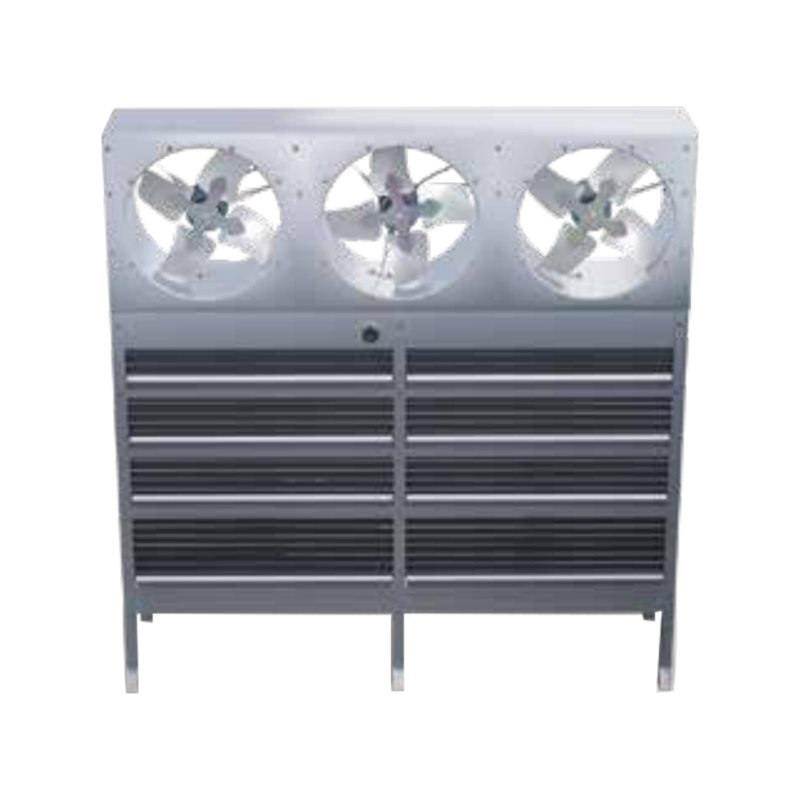
Condensers reject the heat absorbed by the refrigerant, and industrial facilities typically use evaporative condensers or air-cooled condensers sized for the local climate and available water supply, since condenser performance directly limits overall system efficiency, particularly during hot summer months when ambient conditions push condensing temperatures higher. Evaporators, positioned inside the cold storage room, process line, or air handling unit being cooled, come in a wide range of configurations — from large air units to flooded and direct-expansion coil systems — chosen based on the specific temperature control and humidity requirements of the space being served.
Tying these components together is an increasingly sophisticated control and monitoring layer, with modern industrial refrigeration equipment relying on programmable logic controllers and remote monitoring systems to track suction pressure, discharge pressure, refrigerant levels, and defrost cycles in real time. This level of control has become standard practice rather than a premium feature, since early detection of a developing fault, whether a slow refrigerant leak or a failing compressor bearing, prevents a minor issue from escalating into a full system shutdown.
Choosing the Right Refrigerant and System Type
Refrigerant selection remains one of the most consequential decisions in specifying industrial refrigeration equipment, with ammonia (R-717), carbon dioxide (R-744), and various glycol secondary loop systems representing the dominant choices in modern industrial installations. Ammonia offers outstanding thermodynamic efficiency and has a long track record in large cold storage and food processing applications, though its toxicity requires strict safety systems, leak detection, and often specialized regulatory compliance that adds complexity and cost to the overall installation.
Carbon dioxide systems, either as a standalone low-temperature refrigerant or as the low-stage component in a cascade system paired with ammonia, have gained significant ground in recent years due to CO₂'s low environmental impact, non-toxicity, and increasingly favorable regulatory treatment compared to synthetic HFC refrigerants facing phase-down restrictions in many regions. Cascade ammonia-CO₂ systems are now common in new-build cold storage facilities specifically because they combine ammonia's efficiency at the high-temperature stage with CO₂'s safety advantages at the low-temperature stage where personnel exposure risk is more likely.
Secondary refrigerant systems using glycol or brine loops offer a different approach entirely, isolating the primary refrigerant to a central machine room and circulating a secondary fluid throughout the facility, which limits the footprint of potentially hazardous refrigerants and simplifies compliance in facilities where large ammonia charges throughout the building would be difficult to permit or insure. The right choice among these system types depends on facility size, temperature requirements, local regulatory environment, and long-term operating cost considerations that a qualified refrigeration engineer should evaluate against the specific application.
Maintenance, Efficiency, and Total Cost of Ownership
Industrial refrigeration equipment represents a significant capital investment, but the ongoing energy and maintenance costs over a system's operating life typically exceed the initial purchase price many times over, which is why efficiency and maintainability deserve as much attention during specification as upfront cost. Compressor efficiency, condenser sizing relative to local climate, and the sophistication of the control system all directly affect energy consumption, and facilities that invest in variable-speed compressors and optimized control sequencing frequently see substantial reductions in electricity costs compared to older, fixed-capacity systems running on basic on/off control logic.
Preventive maintenance programs are essential to protecting that investment, since industrial refrigeration systems operating continuously under heavy load accumulate wear on compressor components, valves, and heat exchange surfaces at a faster rate than intermittently used equipment. Scheduled oil analysis, refrigerant leak testing, and condenser coil cleaning are standard elements of a maintenance program, and facilities that defer this maintenance in favor of short-term cost savings routinely pay considerably more in emergency repairs and unplanned downtime than the deferred maintenance would have cost.
When evaluating industrial refrigeration equipment from different manufacturers or system integrators, buyers benefit from requesting detailed total cost of ownership projections covering energy consumption, expected maintenance intervals, and component service life, rather than comparing systems on installed cost alone. A system with a higher upfront price but meaningfully lower energy consumption and longer service intervals frequently delivers a lower total cost over a ten to twenty year operating life, which is the realistic planning horizon for most industrial refrigeration installations.
Industries That Rely on Industrial Refrigeration Equipment
Cold Storage & Distribution
Large warehouse facilities storing frozen and chilled goods depend on industrial refrigeration to maintain precise, stable temperatures across enormous storage volumes, often with multiple temperature zones in a single facility.
Food & Beverage Processing
Meat, dairy, and beverage processing plants use industrial refrigeration not just for storage but for process cooling, chilling product rapidly during production to meet food safety and quality requirements.
Pharmaceutical Manufacturing
Temperature-sensitive pharmaceutical production and storage requires tightly controlled, validated refrigeration systems with redundancy and monitoring capable of meeting strict regulatory documentation requirements.
Ice Rinks & Recreation
Large-scale ice rinks and winter sports facilities use industrial refrigeration equipment to maintain ice surfaces, requiring precise temperature control across a large, exposed cooling surface.