


 English
 русский
The efficient and reliable operation of any industrial or commercial refrigeration system hinges not only on the main unit but critically on the performance of its supporting components. Selecting the right refrigeration units accessories is paramount for achieving optimal energy efficiency, maintaining precise temperature control, and ensuring long-term system durability [1]. This comprehensive guide delves into the essential accessories, offering in-depth information to help you make informed decisions for your refrigeration setup.
Content
- 1 Essential Refrigeration Unit Accessories and Their Functions
- 2 Optimizing Performance with Key Add-ons
- 3 Critical Accessories for Specialized Applications
- 4 Selection, Integration, and Maintenance Best Practices
- 5
- 6 Frequently Asked Questions (FAQ)
- 6.1 1. Why can't I just use the cheapest filter drier available?
- 6.2 2. How often should I replace the accessories like filter driers?
- 6.3 3. Is upgrading to a digital refrigeration unit temperature controller accessory worth the cost for an existing system?
- 6.4 4. What's the main advantage of ECM motors for a cold storage evaporator fan motor?
- 6.5 5. Can I install these accessories myself if I'm mechanically inclined?
- 7 References
Essential Refrigeration Unit Accessories and Their Functions
Beyond the compressor, condenser, and evaporator, a robust refrigeration system incorporates several key accessories. These components play specialized roles in protection, regulation, and enhancement.
1. Protective and Regulatory Devices
These accessories safeguard the system's core components from damage and ensure operational stability.
- Filter Driers: Critical for contaminant control, they remove moisture, acid, and particulate matter from the refrigerant, which is fundamental to preventing corrosion and ice formation [2].
- Sight Glasses: Provide a visual indicator of refrigerant moisture content and flow conditions, serving as a primary diagnostic tool for technicians.
- Oil Separators: Essential in compressor protection, they remove lubricating oil from the discharged refrigerant vapor and return it to the crankcase, ensuring adequate lubrication [3].
- Pressure Regulators: Including evaporator pressure regulators (EPR) and crankcase pressure regulators (CPR), they control pressure to optimize evaporator performance and prevent compressor overload under varying load conditions [1].
2. Efficiency and Performance Enhancers
This category includes accessories designed to improve the system's thermodynamic efficiency and operational capacity.
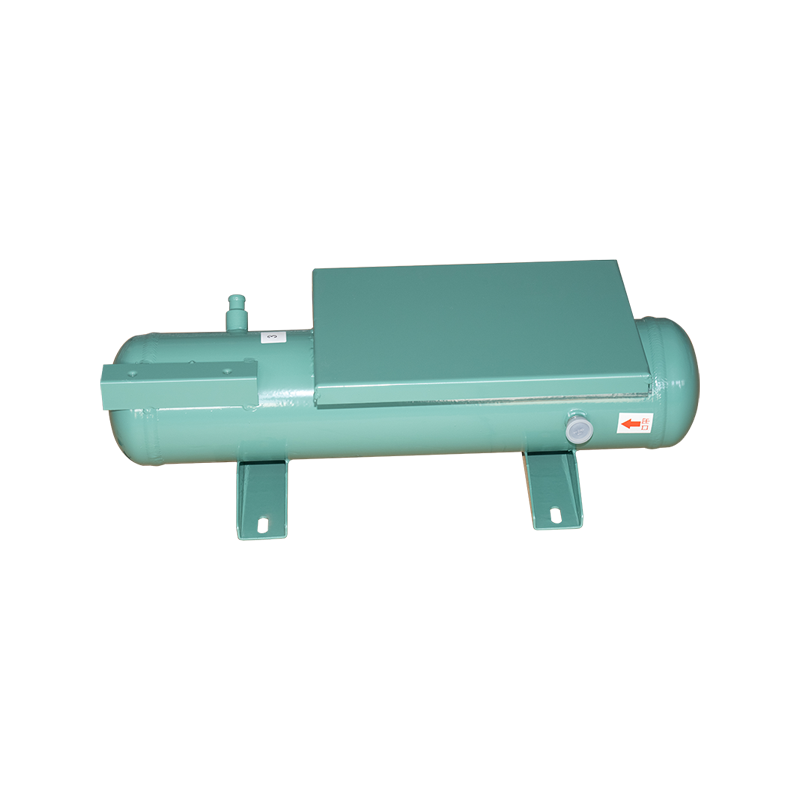
- Suction Line Accumulators: Prevent liquid refrigerant floodback to the compressor, which can cause severe hydraulic damage and failure [3].
- Heat Exchangers (Suction-to-Liquid Line): These components subcool the liquid refrigerant and superheat the suction gas, boosting system capacity and efficiency by improving the refrigeration cycle's effectiveness [1].
- Electronic Expansion Valves (EEVs): Offer superior precision in refrigerant flow control compared to thermal expansion valves (TXVs), leading to better temperature stability and efficiency, especially under part-load conditions [4].
Optimizing Performance with Key Add-ons
Strategic integration of specific accessories can solve common operational challenges and significantly upgrade system performance. Two critical areas for optimization are temperature stability and moisture control.
Addressing Temperature Fluctuations
For applications requiring stringent temperature consistency, such as pharmaceutical storage or precision manufacturing, additional controls are necessary. The implementation of a refrigeration unit temperature controller accessory is a game-changer. While basic thermostats offer simple on/off cycling, advanced digital controllers provide [4]:
- Precise PID (Proportional-Integral-Derivative) control algorithms.
- Multi-stage compressor and fan control.
- Remote monitoring and alarm functionalities.
- Data logging for compliance and analysis.
The difference between basic and advanced control is substantial. The following table outlines the key distinctions:
| Feature | Basic Thermostat | Advanced Digital Controller |
| Control Method | On/Off Cycling | PID Modulation |
| Temperature Stability | ±2°C or more | ±0.5°C or less |
| Energy Efficiency | Lower (frequent starts/stops) | Higher (modulated operation) |
| System Protection | Minimal | Comprehensive (alarms for pressure, temperature, etc.) |
Ensuring System Purity and Longevity
Moisture is one of the most detrimental contaminants in a refrigeration circuit. It can lead to ice formation, acid creation, and component corrosion [2]. Therefore, selecting a high capacity filter drier for refrigeration system is not an accessory but a necessity for system health. Key selection criteria include:
- Moisture Removal Capacity: Measured in "grams of water removed." High-capacity driers are essential for large systems or after a major repair.
- Acid Removal Capability: Look for driers with a high acid number rating to neutralize acids formed from moisture and oil breakdown.
- Particulate Filtration Level: Typically measured in microns (e.g., 10-20 microns) to capture wear particles and debris.
- Compatibility: Must be compatible with the system's refrigerant and lubricant type (e.g., POE oil) [2].
Critical Accessories for Specialized Applications
Standard accessories may not suffice for environments with extreme demands or unique challenges. Here, specialized components become critical.
Cold Room and Warehouse Solutions
Large-scale cold storage facilities face unique challenges in air distribution and defrost management. An inefficient defrost cycle leads to energy waste and temperature spikes. Installing an energy efficient defrost timer for cold rooms can yield significant savings. Modern adaptive defrost timers optimize the defrost cycle based on actual runtime and conditions, rather than a fixed schedule [1]. For optimal air circulation and temperature uniformity, selecting the correct cold storage evaporator fan motor is equally vital. Considerations include:
- Motor Type: ECM (Electronically Commutated Motor) fans offer variable speed and far higher efficiency than standard shaded-pole motors [4].
- Horsepower and CFM: Must be matched to the evaporator coil's capacity and the room's air flow requirements.
- Sealing and Protection: Motors should have appropriate ingress protection (IP) ratings for cold, humid environments.
The choice between standard and high-efficiency components has a direct operational impact. The table below provides a comparison:
| Component | Standard Option | High-Efficiency / Smart Option |
| Defrost Timer | Fixed Interval Mechanical Timer | Adaptive Electronic Defrost Controller |
| Fan Motor | Single-Speed Shaded-Pole Motor | Variable-Speed ECM Motor |
| Primary Benefit | Low Initial Cost | High Energy Savings & Precise Control |
| Operating Cost Impact | Higher long-term energy use | Can reduce fan/defrost energy by 30-50% |
Enhancing Unit Functionality and Monitoring
For technicians and facility managers, maintaining optimal system pressure is crucial for diagnostics and efficiency. A refrigeration unit pressure gauge set is an indispensable tool. A comprehensive set includes:
- High-Pressure Gauge: For discharge pressure monitoring.
- Low-Pressure Gauge: For suction pressure monitoring.
- Compound Gauge: Measures both pressure and vacuum, crucial for evacuation procedures [3].
- Hoses with Quick-Disconnect Couplers: For safe and easy connection to service ports.
Regular use of gauge sets allows for proactive system assessment, charge verification, and troubleshooting of issues like restricted filter driers or expansion valves, as outlined in standard service procedures [3].
Selection, Integration, and Maintenance Best Practices
Choosing and installing accessories requires a systematic approach to ensure compatibility and performance.
Selection Criteria for Accessories
- System Compatibility: Match refrigerant type, oil type, and operating pressures [1].
- Capacity Matching: Size the accessory (e.g., filter drier, accumulator) to the system's tonnage and refrigerant charge [2].
- Quality and Certification: Select components from reputable manufacturers that meet industry standards (UL, CE, ASHRAE).
- Application-Specific Needs: Consider ambient conditions, required reliability, and operational criticality.
Professional Integration and Routine Maintenance
Proper installation is as important as the accessory itself. Brazing with an oxygen-free nitrogen purge prevents internal oxidation. After installation, a thorough evacuation to remove non-condensable gases and moisture is mandatory [3]. A proactive maintenance schedule should include:
- Periodic inspection of filter driers via pressure drop or core replacement [2].
- Calibration checks of pressure gauges and temperature controllers.
- Cleaning of fan blades and motors to maintain airflow.
- Verification of defrost timer settings and heater operation seasonally [1].
As a comprehensive manufacturer integrating R&D and manufacturing, Zhejiang Jinhao Refrigeration Equipment Co., Ltd. understands that the synergy between the main unit and its refrigeration units accessories defines system success. Our expertise in producing unit series and finned heat exchanger series is complemented by the knowledge that the right accessories—from a robust high capacity filter drier for refrigeration system to a smart energy efficient defrost timer for cold rooms—are what transform a standard installation into a model of efficiency and reliability.
Frequently Asked Questions (FAQ)
1. Why can't I just use the cheapest filter drier available?
Using an undersized or low-quality filter drier is a false economy. It may have insufficient moisture or acid removal capacity, leading to premature failure from corrosion or ice blockages [2]. A properly sized, high capacity filter drier for refrigeration system acts as the system's kidney, protecting your significant investment in compressors and other components.
2. How often should I replace the accessories like filter driers?
There's no single timeline. Filter driers should be replaced after any system opening for repair, after a compressor burnout, or when monitoring indicates a problem (e.g., high pressure drop, moisture indicator change) [2], [3]. For preventative maintenance, consult the manufacturer's guidelines, but a common practice is to inspect/replace them every 1-3 years depending on system criticality and operating hours.
3. Is upgrading to a digital refrigeration unit temperature controller accessory worth the cost for an existing system?
In most cases, yes. The upgrade can pay for itself through energy savings from reduced compressor cycling and more precise control [4]. It also enhances product safety by minimizing temperature fluctuations and provides valuable diagnostic data that can help prevent costly breakdowns.
4. What's the main advantage of ECM motors for a cold storage evaporator fan motor?
ECM motors offer two major advantages: significant energy savings (often 50% or more compared to standard motors) and variable speed operation [4]. This allows for better humidity control by adjusting airflow and reduces heat input from the motor itself into the cold space.
5. Can I install these accessories myself if I'm mechanically inclined?
While some accessories may seem straightforward, refrigeration system work requires specialized knowledge, tools (like recovery machines, torches, vacuum pumps), and often certification to handle refrigerants legally [3]. Improper installation can void warranties, cause system failure, or create safety hazards. It is strongly recommended to use qualified refrigeration technicians for installation and major service.
References
[1] ASHRAE Handbook - Refrigeration. American Society of Heating, Refrigerating and Air-Conditioning Engineers, 2022.
[2] International Institute of Ammonia Refrigeration (IIAR). Guidelines for Ammonia Refrigeration System Maintenance and Operation, Bulletin No. 116.
[3] EPA Section 608 Technician Certification Guidelines. U.S. Environmental Protection Agency.
[4] Saidur, R., Masjuki, H. H., & Mahlia, T. M. I. (2010). Energy, economic and environmental benefits of using high-efficiency motors to replace standard motors for the Malaysian sector. Energy Policy, 38(8), 4617-4625. (Conceptual principles applied to motor and control efficiency).