


 English
 русский
Content
Understanding the Heart of Refrigeration Control
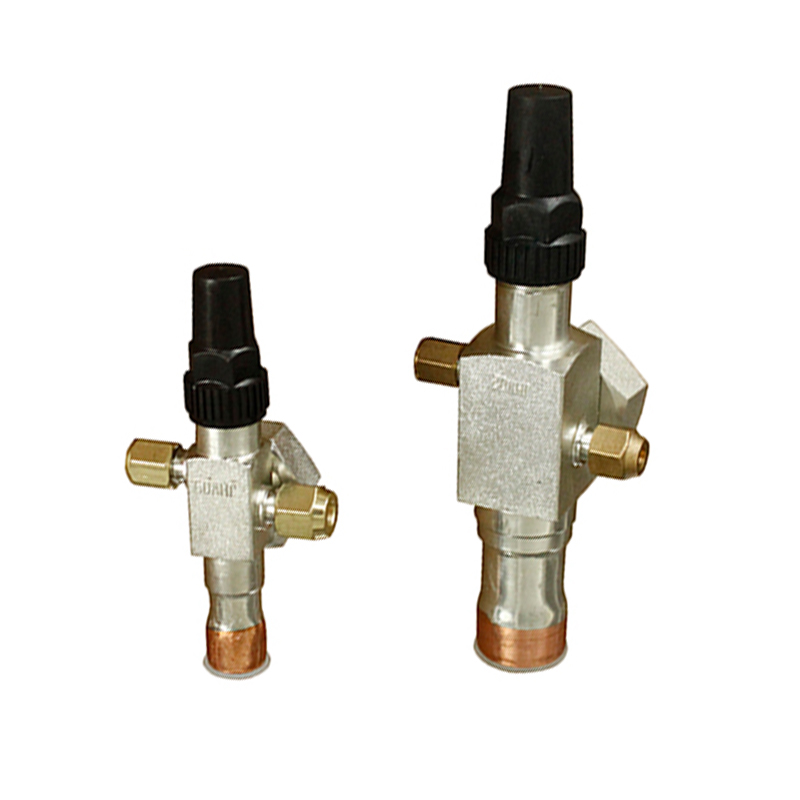
The refrigeration compressor fluid control valve is a pivotal, yet often overlooked, component within the intricate anatomy of cooling systems. Operating at the critical junction between the compressor and the evaporator, this device serves as the principal regulator for the flow of refrigerant—often in a liquid, gaseous, or mixed state—into the compressor. Its primary function is to ensure the compressor receives the correct type and quantity of fluid, safeguarding the compressor from potentially catastrophic failures like liquid slugging while simultaneously optimizing the system's efficiency and capacity. By precisely modulating this flow, the valve protects the compressor's mechanical integrity and enables the system to adapt to varying thermal loads. This introductory exploration sets the stage for a deeper dive into its operational mechanics, which are fundamental to the reliability and performance of commercial refrigeration, air conditioning, and industrial cooling applications. The valve's role is so critical that its failure or improper operation can lead to immediate system degradation, increased energy consumption, and costly repairs, making its understanding essential for technicians, engineers, and optimization specialists in the field.
Core Functions and Operational Mechanics
To fully appreciate the valve's importance, one must understand its core functions and the physical principles governing its operation. The valve acts as a sentinel and a modulator within the refrigeration cycle.
Primary Duties in the Refrigeration Cycle
The valve performs several non-negotiable duties that are central to system health. Firstly, it provides critical compressor protection from liquid refrigerant. Compressors are designed to compress gas, not liquid. If liquid refrigerant enters the compressor crankcase, it can cause hydraulic shock—known as slugging—which can break valves, connecting rods, or other internal components. The control valve prevents this by ensuring only superheated gas, or a controlled mixture, enters the compression chamber. Secondly, it is responsible for capacity regulation and system efficiency. By adjusting the effective volume of gas being compressed, the valve allows the system's cooling output to match the actual heat load. This prevents short cycling under light loads and maintains stable temperatures, directly translating to energy savings and reduced wear. Thirdly, it manages the superheat level at the compressor suction. Proper superheat ensures that the refrigerant is completely vaporized before compression, maximizing efficiency and preventing damage.
How It Achieves Precise Control: Internal Mechanisms
The precise control is achieved through various internal mechanisms that respond to system conditions. Most fluid control valves are actuated by pressure differentials, temperature-sensitive elements, or electronic signals. A common type uses a pressure-sensing element connected to the suction line. When suction pressure drops (indicating a lower load), the valve mechanism begins to restrict the flow passage, reducing the amount of refrigerant mass flow into the compressor. Conversely, a rise in suction pressure opens the valve wider. More advanced designs incorporate temperature sensors to modulate flow based on superheat at the compressor inlet. The internal construction typically involves a precision-machined port and a modulating pin or slide that changes the orifice size. The movement is often dampened to prevent rapid hunting or oscillations, ensuring stable system operation. This continuous, automatic adjustment is what allows a fixed-speed compressor to behave with some characteristics of a variable-capacity system, adapting in real-time to the demands placed upon it.
Delving into Key Variations and Applications
Not all refrigeration compressor fluid control valves are created equal. Their design and application vary significantly based on the system's size, refrigerant type, and desired control strategy. Understanding these variations is key to selecting the right component and diagnosing issues.
Types of Fluid Control Valves
The landscape of fluid control valves can be categorized by their control method and mechanical design.
Mechanical Suction Modulating Valves
These are workhorses of many commercial systems. They operate purely on pressure and/or temperature without external power. A common example is the pilot-operated suction modulation valve, which uses system suction pressure to modulate a main valve port. They are renowned for their reliability, simplicity, and lower cost. However, their response curve is fixed and may not offer the finest level of control compared to electronic versions. They are ideal for applications where load variations are predictable and highly precise control is not the foremost requirement.
Electronic Expansion Valves (EXVs) with Compressor Protection Logic
While often associated with evaporator control, modern Electronic Expansion Valves (EXVs) are increasingly integrated with the compressor's management system. The system's controller uses data from multiple sensors (suction temperature, suction pressure, discharge temperature) to command the EXV to regulate flow not just for evaporator superheat, but explicitly for compressor protection and optimal capacity. This represents a more holistic, system-wide approach to fluid control. For instance, the controller can quickly close the valve to prevent floodback during a sudden shutdown or rapidly adjust to a new load setpoint.
Specialized Valves for Critical Systems
In highly sensitive or large-capacity systems, such as those in industrial processing or data center cooling, specialized valves are employed. These may include stepper motor-driven valves with extreme precision, valves designed for very high or very low pressure differentials, or cascade system valves that handle multiple refrigerant circuits. The choice here is dictated by the critical need for reliability, precision, and often, the ability to interface with complex building management systems (BMS).
Optimal Placement and Integration in a System
The valve's effectiveness is heavily influenced by its placement and integration. Typically, the primary fluid control valve is installed in the suction line, upstream of the compressor inlet. This location allows it to directly govern what enters the compressor. Proper installation requires attention to mounting orientation (as specified by the manufacturer), brazing procedures to prevent internal damage, and often the inclusion of a strainer upstream to protect the valve's delicate components from debris. Integration involves connecting any sensing lines (for pressure-operated valves) or control wiring (for electronic valves) correctly. A critical aspect of integration for performance is ensuring the system's control logic—whether mechanical or digital—is correctly calibrated. For example, the setpoints for modulation must be aligned with the compressor's operational envelope and the expected load profile of the application. This calibration is where the nuanced understanding of how to adjust a refrigeration compressor control valve for optimal performance becomes paramount. Incorrect adjustment can lead to poor efficiency, unstable operation, or failure to protect the compressor.
Addressing Common Challenges and Maintenance
Even the most robust valves will encounter issues over time. Recognizing symptoms, understanding root causes, and performing proactive maintenance are essential skills for ensuring system longevity.
Symptoms of a Failing or Maladjusted Valve
A malfunctioning fluid control valve sends clear signals through the system's operation. One of the most common symptoms is erratic compressor operation, such as short cycling or the inability to reach low-temperature setpoints. This can stem from a valve that is stuck open or closed, failing to modulate. Another telltale sign is abnormal pressure readings, particularly low suction pressure or fluctuating superheat, which directly indicates improper refrigerant flow regulation. Perhaps the most severe symptom is physical evidence of liquid slugging in a compressor due to valve failure. This may be accompanied by knocking sounds from the compressor, excessive oil foaming, or in catastrophic cases, a locked rotor or broken components. High discharge temperatures can also point to a valve issue, as insufficient flow can lead to inadequate cooling of the compressor motor. Technicians must learn to correlate these symptoms, as a single symptom like low suction pressure could have multiple causes, but when combined with others, it often points squarely at the control valve.
Troubleshooting and Diagnostic Procedures
Systematic troubleshooting is required to confirm a valve issue. The process typically begins with a comprehensive system performance check, measuring superheat at the evaporator and compressor inlet, subcooling, and all system pressures. Comparing these values to the system's design specifications or known good baselines is the first step. For mechanical valves, one should check the external sensing line for kinks or blockages and verify the valve body temperature. Sometimes, gently tapping the valve body can free a stuck mechanism, though this is only a temporary diagnostic test. For electronic valves, checking the control signal (e.g., voltage or step count) from the controller and comparing it to the valve's actual position is crucial. A key diagnostic question is: what are the signs your refrigeration fluid valve needs replacement versus repair? Generally, valves with internal corrosion, severely scored or worn modulating elements, or failed motors/actuators require replacement. Issues like minor contamination that can be flushed, or external sensor issues, might be repairable. The decision often hinges on the valve's design—some are serviceable, while many are sealed units.
Essential Maintenance for Longevity
Preventive maintenance is the most cost-effective strategy. This centers on ensuring system cleanliness. Maintaining a clean, dry, and acid-free refrigeration system is the single best thing one can do for any control valve. This involves:
- Routine filter-drier changes to capture moisture and acids.
- Proper evacuation procedures before commissioning to remove non-condensable gases and moisture.
- Regular oil analysis for systems with lubricant concerns, as contaminated oil can affect valve operation.
For valves themselves, periodic operational checks are advised. This includes verifying modulation is smooth and responsive to load changes by monitoring system parameters over a range of conditions. Any signs of hysteresis (where the valve position lags or sticks) should be noted. Ensuring that the valve's external components—like sensing bulb mounts on temperature-actuated valves—are securely fastened and properly insulated is also vital for accurate operation.
Strategic Selection and System Optimization
Choosing the right valve and configuring it optimally is not a mere installation step; it is a strategic decision that impacts the system's total cost of ownership, efficiency, and reliability for years to come.
Factors Guiding Valve Selection
Selecting the appropriate valve requires a multi-faceted analysis that goes beyond just matching pipe sizes. The following table contrasts key considerations for two broad categories: basic mechanical valves versus advanced electronic valves.
The choice between a basic mechanical valve and an advanced electronic valve depends on several factors. Mechanical valves offer simplicity and reliability at a lower initial cost, while electronic valves provide superior precision and integration capabilities, often at a higher upfront investment.
| Consideration | Mechanical / Pilot-Operated Valves | Electronic / Actuated Valves |
|---|---|---|
| Control Precision | Good for stable, predictable loads. Has a fixed response curve. | Excellent. Can be precisely programmed and adapted to complex, variable loads. |
| Initial Cost | Generally lower. | Higher, due to valve, actuator, and controller costs. |
| Integration Complexity | Low. Standalone operation based on pressure/temperature. | High. Requires wiring, controller programming, and sensor integration. |
| Diagnostic Capabilities | Limited. Failure is often inferred from system symptoms. | Advanced. Can provide feedback (position, error codes) to system controllers for alerts. |
| Best Suited For | Standard commercial refrigeration cases, walk-ins, and systems with modest load variation. | Complex HVAC systems, cascades, and applications where maximizing efficiency under variable loads is critical. |
Beyond this comparison, specific technical factors are paramount. The valve must be rated for the specific refrigerant type (e.g., R-134a, R-410A, R-744) and its associated oil. Its pressure and temperature ratings must exceed the system's maximum operating conditions. The capacity rating (in tons of refrigeration or kW) must match the compressor and system size—an undersized valve will starve the compressor, while an oversized valve may not modulate effectively at low loads. Finally, the question of compatibility of fluid control valves with different refrigerant types is non-negotiable. Materials like seals, O-rings, and internal components must be compatible with the refrigerant and oil chemistry to prevent swelling, degradation, or corrosion that would lead to rapid failure.
The Critical Role in System Efficiency
A properly selected and adjusted fluid control valve is a direct contributor to system energy efficiency. Its role in capacity modulation prevents the compressor from operating at full load when it is not needed, reducing power consumption. More subtly, by ensuring the correct superheat at the compressor suction, it optimizes the volumetric efficiency of the compression process. This is why the procedure for how to adjust a refrigeration compressor control valve for optimal performance is so critical. The adjustment aims to find the "sweet spot" where the valve provides just enough flow to meet the load while maintaining a safe, positive superheat, avoiding both liquid floodback and excessive superheat that reduces capacity and increases discharge temperature. In modern, digitally controlled systems, this adjustment is often an ongoing, automated process where algorithms continuously tweak the valve position to chase peak efficiency points based on real-time sensor data. This ongoing optimization underscores the valve's transition from a simple protective device to an active efficiency management node within the smart refrigeration system.
Exploring Advanced Concepts and Future Trends
The evolution of refrigeration technology continually pushes the boundaries of what fluid control valves can do. Understanding these advanced concepts helps in planning for future systems and retrofits.
Integration with System-Wide Controls
The modern trend is moving away from standalone valves towards deeply integrated components. In a fully orchestrated system, the fluid control valve receives commands from a central controller that processes data from dozens of sensors: not just suction conditions, but also discharge temperature, ambient temperature, case temperatures, and even utility demand signals. This allows for sophisticated strategies like demand-response, where the system slightly reduces capacity during peak electricity rates by modulating the valve, all while maintaining safe temperature bands. This level of integration turns the valve into a key execution device for broader energy management and operational strategies. It also enhances diagnostic capabilities, allowing the system to trend valve performance and predict maintenance needs before a failure occurs, directly addressing the query about signs your refrigeration fluid valve needs replacement versus repair by moving from reactive to predictive maintenance.
Innovations for Extreme Environments and New Refrigerants
As regulations phase down high-GWP refrigerants, new options like hydrocarbons (e.g., R-290), HFOs, and CO2 (R-744) are gaining prominence. These refrigerants have different pressure-temperature relationships and material compatibility requirements. Valves for CO2 systems, which operate at transcritical or very high pressures, require radically different designs with robust materials and seals. Similarly, valves for flammable refrigerants like R-290 may require special certifications and designs to prevent leakage. Furthermore, the pursuit of efficiency in extreme environments—such as very low-temperature freezers or high-ambient condensing situations—is driving valve innovation. Manufacturers are developing valves with wider modulation ranges, faster response times, and enhanced materials to handle the stresses of these demanding applications. The ongoing research into benefits of a modulating fluid control valve vs a fixed orifice in these new contexts continues to validate the superiority of modulation for both protection and efficiency, even as the hardware evolves to meet new challenges. The fixed orifice, while simple, cannot adapt to the wide load swings and unique characteristics of many new refrigerant systems, making the intelligent control valve more indispensable than ever.
The Bottom Line on Valve Selection and System Health
Ultimately, the refrigeration compressor fluid control valve is a cornerstone of system durability and efficiency. Its selection should be guided by a clear understanding of the application's load profile, the refrigerant environment, and the desired level of control sophistication. Whether dealing with the aftermath of liquid slugging in a compressor due to valve failure or calibrating a system for peak efficiency, the principles remain rooted in ensuring the correct mass flow and state of refrigerant to the compressor. As systems become smarter and refrigerants evolve, the fundamental purpose of this valve remains constant: to serve as the intelligent gatekeeper for the compressor, the most valuable component in any refrigeration circuit. A deliberate, informed approach to this component pays dividends in reduced downtime, lower energy bills, and extended equipment life, making it a critical focus area for any professional dedicated to system optimization.