


 English
 русский
Content
What Is an Evaporative Air Cooler and How Does It Work?
An evaporative air cooler — commonly called a swamp cooler — cools air through the thermodynamic process of water evaporation. Hot, dry air is drawn through water-saturated cooling pads by a fan; as the air passes through the wet media, water molecules absorb heat from the airstream and evaporate, lowering the air temperature before it is discharged into the space. No refrigerant, compressor, or condenser is involved — the entire cooling effect is produced by the latent heat of vaporization of water, which absorbs approximately 2,260 joules per gram of water evaporated.
The core components of an evaporative air cooler are a water reservoir, a circulating pump that wets the cooling pads, rigid or cellulose cooling media (the evaporator pads), and a fan that draws ambient air through the pads and into the room. In a direct evaporative cooler — the most common residential type — the cooled, humidified air is delivered directly to the living space. Indirect and two-stage evaporative coolers use a heat exchanger to cool supply air without adding humidity, but these are primarily found in commercial and industrial applications.
The theoretical maximum cooling achievable is determined by the wet-bulb depression — the difference between the ambient dry-bulb temperature and the wet-bulb temperature. In a 38°C (100°F), 15% relative humidity environment, the wet-bulb temperature is approximately 21°C (70°F), meaning a well-designed evaporative cooler can theoretically deliver air as cool as 21°C — a 17°C drop. In practice, well-maintained residential units achieve 70–80% of this theoretical maximum, delivering supply air 10–15°C cooler than ambient in ideal conditions.
Are Evaporative Air Coolers Effective?
Evaporative coolers are genuinely effective — but only under the right climatic conditions. Their effectiveness is directly and mathematically tied to ambient relative humidity. The lower the humidity, the greater the wet-bulb depression, and the more cooling the unit can deliver. In arid and semi-arid climates — the American Southwest, the Middle East, North Africa, inland Australia, and the Tibetan Plateau — evaporative coolers are highly effective and have been the dominant residential cooling technology for generations.
A useful rule of thumb: evaporative coolers work well when outdoor relative humidity is consistently below 50–60%. At 30–40% RH, a quality unit can reduce perceived temperature by 10–15°C and provide genuine thermal comfort. At 50–60% RH, cooling is marginal — supply air may only be 3–5°C cooler than ambient, and the added humidity offsets the temperature drop in terms of perceived comfort (as measured by the heat index). Above 70% RH, the wet-bulb depression is too small to produce meaningful cooling, and the unit primarily functions as a fan with a humidification side effect.
Effectiveness also depends on ventilation. Unlike air conditioners, which recirculate and cool the same sealed indoor air, evaporative coolers require open windows or vents to allow the humidified exhaust air to escape. Without ventilation, humidity builds rapidly in the space, the wet-bulb depression across the pads narrows, and cooling performance collapses. The general recommendation is to provide one to two square feet of open window or vent area per 1,000 CFM of cooler airflow.
Evaporative Air Cooler in a Humid Climate: What Happens
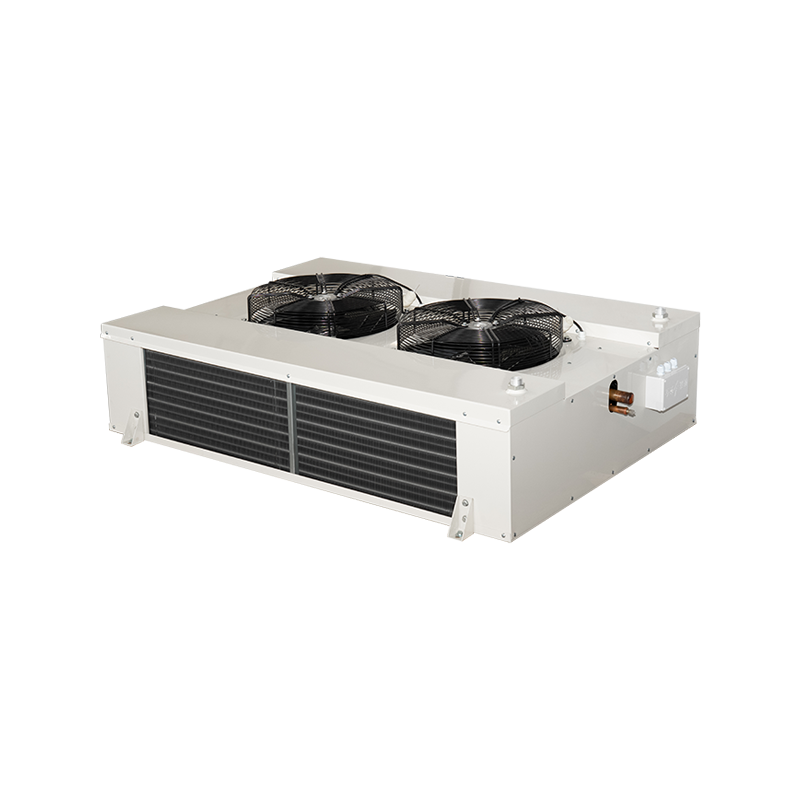
Running a direct evaporative cooler in a humid climate — the Gulf Coast, the southeastern United States, most of Southeast Asia, coastal China, or equatorial Africa — produces little to no cooling and actively increases indoor discomfort. The physics are straightforward: when ambient relative humidity is already 70–85%, the air approaching the cooling pads is close to saturation. Little additional evaporation occurs, so the latent heat exchange is minimal and supply air temperature barely drops below ambient. The fan component provides modest air movement comfort, but the net effect is a slightly cooler, noticeably more humid indoor environment — which raises the heat index, not lowers it.
Beyond comfort, operating an evaporative cooler in high-humidity conditions creates material problems inside the building. Sustained indoor relative humidity above 65–70% promotes dust mite proliferation, condensation on cool surfaces, and biological growth on porous materials — outcomes addressed in the mold section below. For humid climates, a conventional refrigerant-based air conditioner or a heat pump is the appropriate cooling technology — it dehumidifies as it cools, reducing both temperature and moisture load simultaneously.
Do Swamp Coolers Cause Mold?
Swamp coolers can contribute to mold growth, but whether they do depends on climate, maintenance practices, and building conditions — not on the technology inherently. The risk pathway is straightforward: evaporative coolers add moisture to indoor air. If that moisture raises indoor relative humidity consistently above 65%, and if that humidity contacts porous surfaces (drywall, wood framing, carpet, insulation), mold spores that are always present in indoor air have the conditions to germinate and grow.
In dry climates where evaporative coolers are designed to operate, the added indoor humidity typically stays within an acceptable range (45–60% RH) because the dry outdoor air absorbs the moisture and is vented out. The risk is elevated in three specific scenarios:
- Operating in humid conditions: Running a swamp cooler when outdoor RH is already high stacks moisture on moisture, pushing indoor humidity well above safe levels quickly.
- Insufficient ventilation: Closing windows while the cooler runs traps humidified air indoors. Without air exchange, humidity accumulates regardless of outdoor conditions.
- Poor cooler maintenance: Stagnant water in the reservoir, dirty or degraded cooling pads, and mineral scale on internal surfaces create conditions for bacterial and mold growth within the unit itself. The cooler then disperses mold spores and bacteria along with the cooled air — a direct indoor air quality problem independent of the humidity question.
Preventive maintenance largely eliminates the in-unit mold risk: drain and clean the reservoir weekly during active use, replace cooling pads at the start of each season (or every 1–3 years for rigid media pads), and run the fan without the pump for 30–60 minutes at the end of each day to dry the pads before shutdown. Anti-microbial pad treatments and reservoir additives are also available and reduce biological growth between cleaning cycles.
Swamp Cooler Pros and Cons
Evaporative coolers occupy a specific niche in the cooling equipment landscape. Their advantages are substantial in the right context; their limitations are equally significant in the wrong one.
Advantages
- Energy efficiency: Evaporative coolers consume 75–90% less electricity than a refrigerant-based air conditioner of comparable cooling capacity. A 5,000 CFM whole-house swamp cooler typically draws 300–600W; an equivalent-capacity central air conditioner draws 3,000–5,000W. For households in arid climates running cooling for 4–6 months per year, this difference produces substantial utility savings.
- Low purchase and installation cost: Residential evaporative coolers cost significantly less than central air conditioning systems to purchase and install. A rooftop whole-house unit with installation typically runs $1,500–$4,000; central AC systems with ductwork often cost $5,000–$15,000 or more.
- No refrigerant: Evaporative coolers contain no hydrofluorocarbons (HFCs) or other refrigerants — no leak risk, no refrigerant disposal concern, and no compressor to fail.
- Fresh air supply: Because evaporative coolers continuously draw in and circulate outdoor air, they provide constant fresh air ventilation — unlike sealed air conditioning systems, which recirculate indoor air. In well-ventilated spaces this improves indoor air quality.
- Simple maintenance: The main serviceable components — pads, pump, motor, reservoir — are accessible and inexpensive. Most homeowners can perform seasonal maintenance without professional service.
Disadvantages
- Climate-dependent performance: Effectiveness drops sharply as humidity rises. In climates with humid summers — or even in dry climates during monsoon season — cooling output can fall to near zero for extended periods.
- Continuous water consumption: A whole-house evaporative cooler uses 3–15 gallons of water per hour depending on size and climate. In water-scarce regions, this is a meaningful resource consideration alongside the electricity savings.
- Hard water scaling: In areas with high mineral content water, calcium and magnesium deposits accumulate on pads, pump components, and distribution tubing — reducing cooling efficiency and requiring more frequent cleaning or the use of water treatment additives.
- Requires open windows: The need for ventilation means the building cannot be sealed — a disadvantage when outdoor air quality is poor (dust storms, wildfire smoke, high pollen) or when security is a concern.
- Mold and air quality risk if poorly maintained: As detailed above, neglected units can become sources of mold spores and bacteria in the supply airstream.
| Factor | Evaporative Cooler | Refrigerant AC |
|---|---|---|
| Energy use (cooling) | 300–600W typical | 1,500–5,000W typical |
| Purchase + install cost | Low ($1,500–$4,000) | High ($5,000–$15,000+) |
| Effectiveness in dry climate | High | High |
| Effectiveness in humid climate | Low to none | High |
| Dehumidification | None (adds humidity) | Yes (removes moisture) |
| Water consumption | 3–15 gal/hr | None (condensate only) |
| Ventilation requirement | Open windows required | Sealed building preferred |
| Refrigerant | None | Required (HFC/HFO) |
Evaporative Cooler Pad Types and Maintenance
The cooling pad — the evaporator media through which air passes and water evaporates — is the most critical component for performance and air quality. Two main types are used in residential and commercial units:
Cellulose (Aspen) Pads
Traditional aspen fiber pads are inexpensive, provide good evaporative efficiency, and are easy to replace. Their drawbacks are a shorter service life (typically one season), susceptibility to mold and bacterial growth when not properly dried between uses, and a tendency to absorb mineral scale that requires frequent cleaning. Aspen pads are the common choice for low-cost portable and window-mounted coolers.
Rigid Cellulose (Honeycomb) Pads
Rigid cross-fluted cellulose media — sometimes called honeycomb pads — offer higher evaporative efficiency (up to 90% saturation efficiency vs 75–80% for aspen), longer service life (3–5 years), and better resistance to biological growth due to their treated surface coatings. They are the standard in quality whole-house and commercial evaporative coolers. They cost more upfront but produce better cooling and lower maintenance frequency over their service life. Rigid pads should still be inspected annually for scale buildup and biological growth at the pad surface, and replaced when efficiency visibly drops or odors develop.
Seasonal Maintenance Schedule
At the start of each cooling season: inspect and replace pads if needed, clean the reservoir and pump screen, check the water distribution tube for clogged holes, lubricate fan motor bearings if not sealed, and test the float valve for correct water level control. During the season: drain and flush the reservoir weekly, check pads for scale or slime monthly, and run fan-only mode for at least 30 minutes at day's end to dry the media. At season end: drain the reservoir completely, remove and store or replace pads, cover the unit exterior to prevent rodent entry, and lubricate all moving parts before storage. A consistent maintenance routine eliminates the mold and air quality risks associated with evaporative coolers and preserves cooling efficiency across multiple seasons.