


 English
 русский
Content
Evaporative Cooler vs Swamp Cooler — Are They the Same Thing?
The terms evaporative cooler and swamp cooler refer to exactly the same type of device. "Swamp cooler" is an informal regional term used primarily in the American Southwest and parts of Australia, while "evaporative cooler" or "evaporative air cooler" is the standard technical and commercial name used globally. The nickname is somewhat ironic — evaporative coolers work best in dry, arid climates that are the opposite of swampy environments, which is why the term is thought to have originated as a joke among early users in the desert regions where these units were most popular.
Both names describe the same operating principle: a pump circulates water over absorbent pads or media, a fan draws warm outside air through the wet pads, and the evaporation of water from the pad surface absorbs heat from the airstream — cooling it by 5°C to 15°C before it is discharged into the space. No refrigerant, compressor, or condenser is involved. The entire cooling effect comes from the thermodynamic process of water evaporation.
Understanding this mechanism immediately reveals the technology's fundamental constraint: evaporative cooling adds moisture to the air. The cooler the air gets, the more humid it becomes. In a dry climate where incoming air has a low wet-bulb temperature, there is ample capacity for evaporation and the cooling effect is substantial. In a humid climate where the air is already saturated or near-saturated with moisture, evaporation slows dramatically, cooling performance collapses, and the space becomes uncomfortably humid without meaningful temperature reduction.
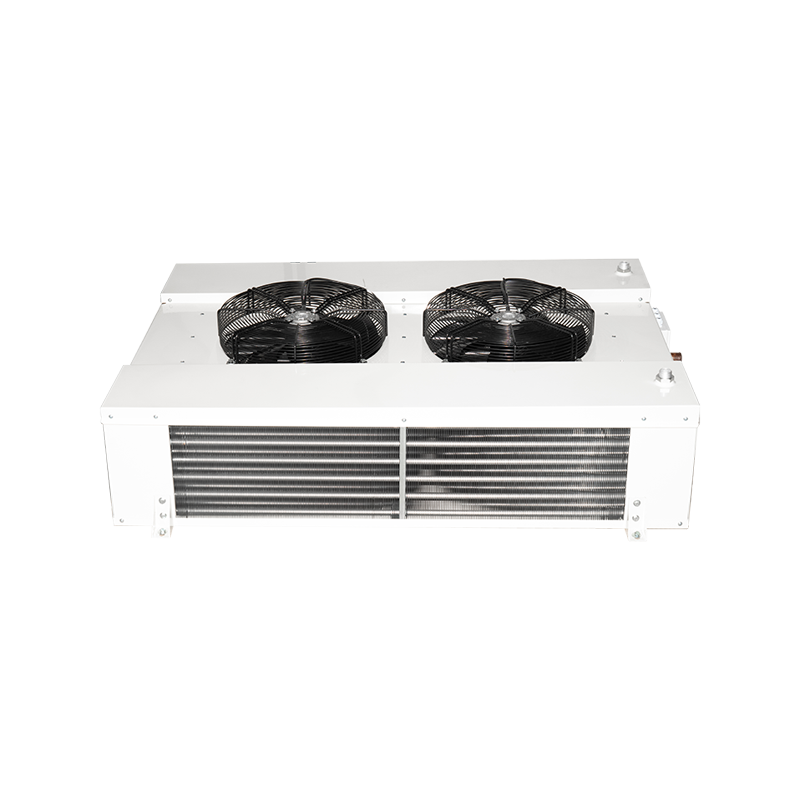
How Evaporative Air Cooler vs Air Conditioner Technology Fundamentally Differs
A conventional air conditioner operates on the vapor-compression refrigeration cycle. A compressor pressurizes refrigerant gas, which then releases heat through a condenser coil (typically outside the building). The refrigerant expands through an expansion valve, cooling dramatically, and the cold refrigerant absorbs heat from indoor air passing over the evaporator coil. This heat is carried outside and expelled — the indoor air is cooled and simultaneously dehumidified, since moisture condenses on the cold evaporator coil and drains away.
The contrast with evaporative cooling is stark across several dimensions:
- Humidity effect: Air conditioners remove humidity from indoor air — a significant comfort advantage in humid climates and during monsoon seasons. Evaporative coolers add humidity, which can be beneficial in very dry climates where occupants experience dry skin, irritated airways, and static electricity, but is a serious disadvantage anywhere ambient humidity is already high.
- Ventilation requirement: Air conditioners recirculate indoor air in a closed loop — windows and doors should be closed to retain the cooled air. Evaporative coolers require continuous fresh air intake and a means for humid exhaust air to escape — windows or vents must be partially open, otherwise humidity builds up until evaporation stops and cooling ceases entirely.
- Temperature control precision: Air conditioners maintain a set indoor temperature regardless of outdoor humidity, delivering consistent performance on both dry and humid days. Evaporative cooler output temperature varies with outdoor wet-bulb temperature — on a dry 40°C day with low humidity, an evaporative cooler can deliver air at 22°C–25°C; on a humid 32°C day, the same unit may only reduce air temperature by 3°C–5°C.
- Air quality and filtration: Air conditioners recirculate and filter indoor air; high-end units include HEPA or multi-stage filtration that captures particulates, allergens, and in some cases pathogens. Evaporative coolers draw in unfiltered outdoor air continuously — they improve ventilation but do not filter it beyond basic dust pads, making them unsuitable for environments with high outdoor air pollution or for occupants with severe allergies.
Evaporative Cooler vs AC: Energy Consumption and Running Costs
Energy consumption is where the evaporative cooler vs AC comparison most clearly favors evaporative technology — in climates where it is applicable. An evaporative cooler's electrical load consists only of a fan motor and a small water pump, typically drawing 100–500 watts for residential units. A comparable-capacity central air conditioner compressor draws 1,500–5,000 watts, and even a window unit for the same room size draws 700–1,500 watts. In comparable operating conditions, evaporative coolers consume 75–80% less electricity than refrigerant-based air conditioners.
Water consumption adds a running cost that air conditioners do not have. A residential evaporative cooler uses approximately 4–25 liters of water per hour depending on unit size, fan speed, and ambient dryness — drier air causes faster evaporation and higher water consumption. In regions with high water costs or water scarcity concerns, this consumption must be factored into total operating cost comparisons alongside electricity savings.
Installation and purchase costs also favor evaporative coolers significantly. A whole-house evaporative cooler with ducting typically costs 50–70% less to purchase and install than a comparable central air conditioning system. Maintenance is simpler — pad replacement once or twice per season, periodic pump servicing, and winterization in cold climates — compared to the refrigerant system maintenance, filter replacements, and coil cleaning that air conditioners require. However, in humid climates where an evaporative cooler delivers inadequate cooling, the lower purchase price is irrelevant — the unit simply cannot perform the required function.
Which Climate Suits Each — and When a Hybrid Approach Makes Sense
The decisive factor in the evaporative cooler vs air conditioner decision is local climate, specifically the typical outdoor relative humidity during the hottest months. As a practical guideline:
- Below 30% relative humidity: Evaporative coolers perform excellently and represent a compelling choice on energy, cost, and comfort grounds. Regions such as the American Southwest (Arizona, Nevada, New Mexico), inland Australia, the Middle East, Central Asia, and northern India during the dry season fall into this category.
- 30–50% relative humidity: Evaporative coolers provide useful cooling during the hottest parts of the day when dry heat dominates, but performance degrades during cooler mornings and evenings when relative humidity is naturally higher. In these climates, evaporative coolers are viable as a primary cooling solution with awareness of their limitations.
- Above 50% relative humidity: Evaporative coolers deliver insufficient cooling and raise indoor humidity to uncomfortable and potentially unhealthy levels. Air conditioning is the appropriate technology for consistently humid climates — coastal regions, tropical climates, and most of Southeast Asia, southern China, the Gulf Coast of the United States, and similar zones.
In climates with distinct dry and humid seasons — the monsoon regions of India, Mexico, and the American Southwest being the most prominent examples — a hybrid approach is common and practical. Evaporative coolers handle the long dry season economically, while a smaller supplemental air conditioning unit or split system covers the humid monsoon months when evaporative performance collapses. This combination reduces annual energy costs substantially compared to running air conditioning year-round, while ensuring comfort is maintained across all weather conditions.
Two-stage or indirect-direct evaporative coolers represent a technological middle ground — a first indirect stage cools air without adding moisture, followed by a direct evaporative stage that adds only limited humidity. These systems extend viable operating humidity ranges to around 60–65% relative humidity and achieve lower supply air temperatures than single-stage direct units, but at significantly higher equipment cost that narrows the economic advantage over conventional air conditioning in all but the most energy-cost-sensitive applications.