


 English
 русский
In refrigeration system design, the choice between a vertical and a horizontal liquid receiver often comes down to available space and piping convenience. Yet that choice also determines how liquid refrigerant settles inside the receiver, how the condenser outlet line must approach the inlet port, and whether the compressor gets the liquid seal it needs on startup. For systems with large refrigerant charges, the orientation decision deserves to be made early, not discovered during commissioning.
Content
- 1 Why Receiver Orientation Changes Liquid Refrigerant Management
- 2 Vertical Receivers: Gravity-Locked Liquid Storage
- 3 Horizontal Receivers: Flexible Piping for Tight Machinery Rooms
- 4 What Orientation Does to the System Piping Layout
- 5 How to Choose the Right Orientation for Your System
- 6 Frequently Asked Questions
Why Receiver Orientation Changes Liquid Refrigerant Management
Receiver orientation determines the gravity distribution of liquid refrigerant, the gas separation path, and the liquid seal protection available to the compressor.
A liquid receiver has two functional zones: a liquid storage volume and a gas separation space. A vertical receiver lets the liquid settle downward along the gravity axis, so the discharge port at the bottom always sees pure liquid. A horizontal receiver spreads the liquid along a wider interface, which can change how much refrigerant is needed to maintain a stable liquid level.
A liquid refrigerant receiver stores the liquid coming from the condenser and ensures that only single-phase liquid reaches the expansion valve, preventing gas bypass that can starve the evaporator or damage the compressor.
Vertical Receivers: Gravity-Locked Liquid Storage
Vertical receivers use the vessel height to create a stable gravity liquid seal, so even a relatively small charge produces a reliable liquid level at the outlet.
When the condenser outlet drops into the top of a vertical receiver, the liquid falls through the gas space to the bottom. The gas separates upward and exits toward the suction side of the system. The liquid outlet sits at the lowest point, which means the piping from the receiver to the expansion valve starts with liquid under a positive static head.
- Liquid outlet is at the lowest point, so no gas pocket can form near the discharge
- Gas separation path is short, reducing the risk of entrained bubbles entering the expansion valve
- Footprint is small, which matters in cold rooms with limited machinery space
- Level gauge reading is straightforward and the bottom drain can fully evacuate the vessel
In practice, a vertical receiver with a 100 mm liquid seal above the outlet can prevent compressor startup liquid slugging in most industrial systems, but only if the connecting piping is sized to avoid oil trap formation.
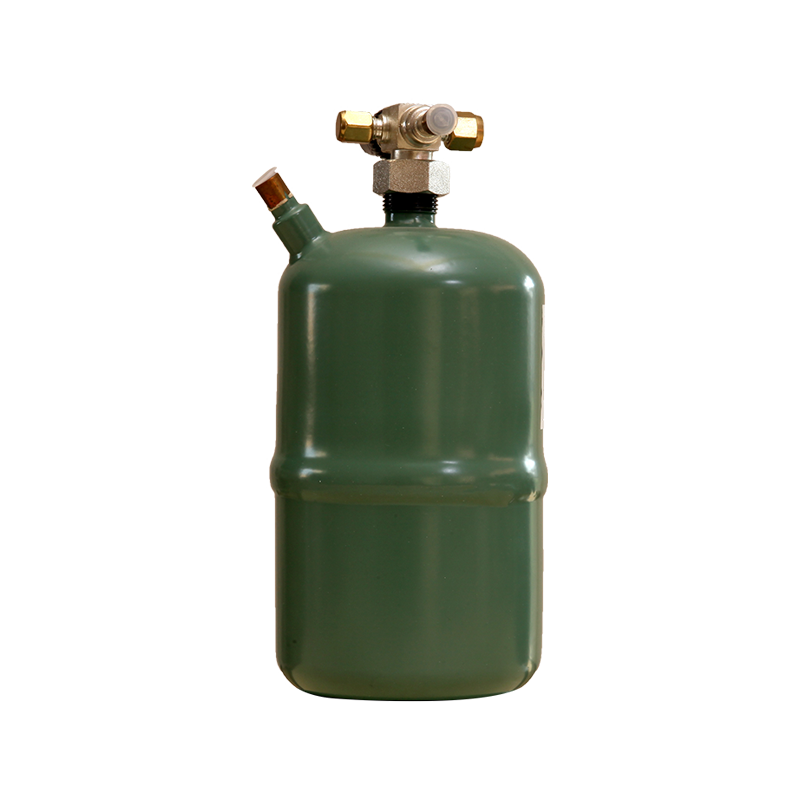 Vertical Liquid Receiver for Refrigeration SystemsThe vertical liquid receiver provides a liquid seal to prevent compressor startup slugging, ensuring reliable operation in most industrial systems when piping is sized correctly.View Product →
Horizontal Receivers: Flexible Piping for Tight Machinery Rooms
Horizontal receivers offer more connection options for the condenser outlet line, which shortens the piping length when the condenser and the expansion valve are close to each other.
A horizontal receiver can accept the condenser outlet line from almost any direction: top, side, or even the end cap. The liquid spreads along a larger vapor-liquid interface, which some engineers find useful when the receiver is shared by multiple circuits. The trade-off is that the liquid outlet usually sits on the side of the vessel, so the static head above the outlet depends on the actual liquid level inside.
- Fewer elbows between condenser and receiver inlet, reducing pressure drop
- Works well when condenser height is low and there is no room to drop the liquid vertically
- Easier to design as a two-circuit or multi-circuit common receiver
- Suitable for ceiling-mounted condensing units where vertical height is constrained
On a ceiling-mounted condensing unit, a horizontal receiver can cut up to 1 meter of unnecessary piping length compared to a vertical receiver, but the fill level must be monitored more closely to avoid gas bypass.
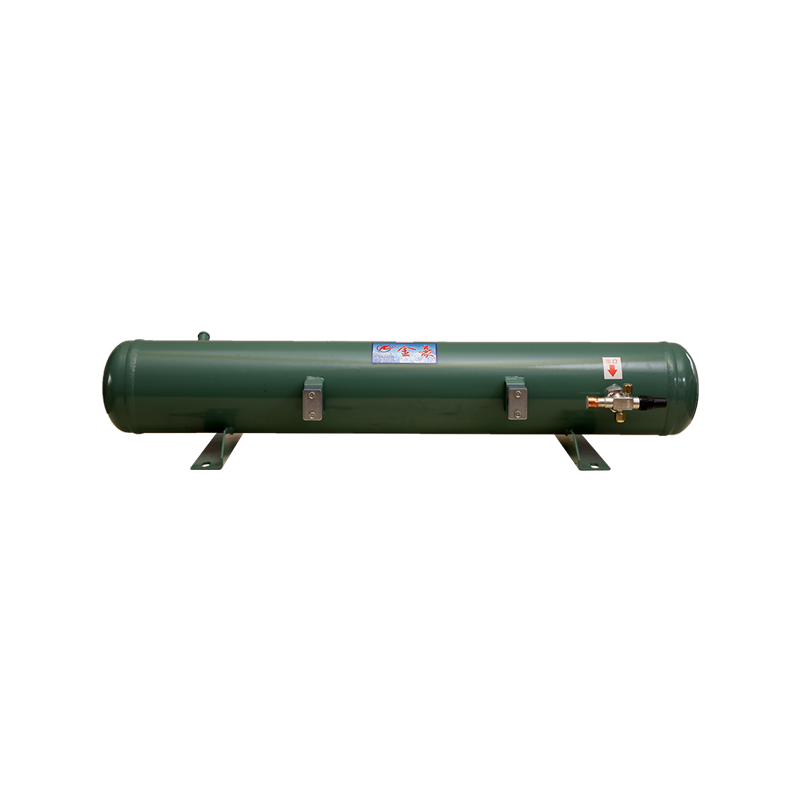 Horizontal Liquid Receiver for Compact InstallationsA horizontal receiver saves up to 1 meter of piping on ceiling-mounted units, but fill level monitoring is critical to avoid gas bypass.View Product →
What Orientation Does to the System Piping Layout
Orientation changes the piping in two critical sections: the condenser outlet to the receiver inlet and the receiver outlet to the expansion valve.
A vertical receiver forces the condenser outlet line to drop downward, so the bottom of the condenser must be higher than the top of the receiver. This is not always practical, especially on rooftop units or rack systems. A horizontal receiver allows the condenser outlet line to run horizontally into the side of the vessel, which suits installations where vertical clearance is not available. For detailed guidance on refrigerant handling and accumulator sizing, see our article on liquid refrigerant management.
| Comparison | Vertical Receiver | Horizontal Receiver |
| Liquid outlet location | Bottom head | Side shell |
| Condenser outlet height | Higher than receiver inlet | Can be near receiver level |
| Expansion valve connection | Below minimum liquid level | At side, level dependent |
| Typical elbow count in condenser line | 2-3 more | Fewer |
| Liquid seal stability | High | Moderate |
Comparative performance of vertical and horizontal receivers in key design indicators
The engineer's objective is not to choose the best orientation, but to find the orientation that aligns with the existing condenser outlet angle, expansion valve position, and maintenance space.
How to Choose the Right Orientation for Your System
Before selecting the orientation, measure three parameters: the lowest point of the condenser outlet, the position of the expansion valve, and the service clearance around the receiver.
The decision process is simple. First, determine whether the condenser output can be piped downward into the receiver top. If yes, a vertical receiver gives the most stable liquid seal. If not, a horizontal receiver may be the only way to keep the liquid line short and the pressure drop low.
- Measure the condenser outlet lowest point to the intended receiver mounting plane
- Define the expansion valve position relative to the receiver
- Evaluate the acceptable piping adjustments without creating oil traps
- Add at least 100 mm liquid seal height above the outlet
- Confirm the level gauge and drain service clearance direction
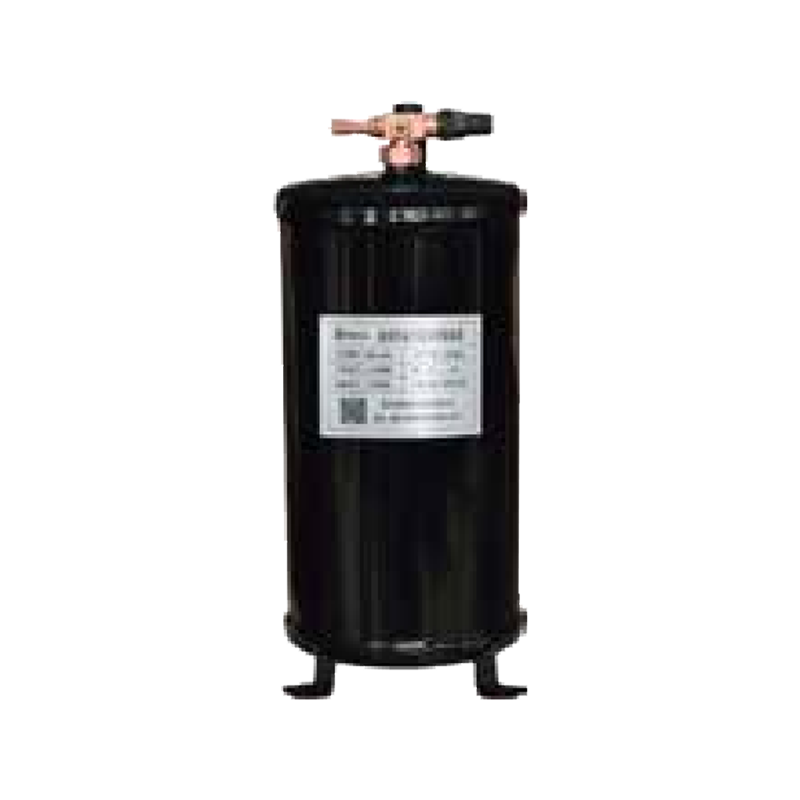 Vertical Liquid Receiver with Rotary ValveVertical installation is safer for liquid safety and gas separation. The rotary valve allows 360-degree rotation, simplifying installation in tight spaces.View Product →
Frequently Asked Questions
Can a vertical liquid receiver be installed horizontally?
Yes, but the usable liquid volume and gas separation performance change. The level gauge may become unreliable, and the oil accumulation pattern shifts. Unless the system design has been adjusted for horizontal installation, keeping the receiver vertical is safer.
Does a horizontal receiver cause more gas entrainment than a vertical receiver?
In general, yes. A horizontal receiver has a wider liquid-vapor interface, and the liquid outlet is on the side, so the outlet distance from the gas space is shorter. Sufficient liquid level and a properly sized outlet line can mitigate this.
Does receiver orientation affect the refrigerant charge amount?
It does. With the same vessel volume, a vertical receiver typically uses a higher percentage of its volume for liquid storage, so it reaches the same liquid level with a smaller charge. A horizontal receiver often needs more charge to maintain a liquid seal because the outlet sits on the side.
How does receiver orientation affect oil return?
A vertical receiver collects oil at the bottom, which makes scheduled oil removal easier. A horizontal receiver requires careful positioning of the oil return port to prevent oil from accumulating along the shell and blocking liquid flow.