


 English
 русский
Every cold room operator has faced the same problem: the air cooler coil turns into a block of frost, the room temperature drifts upward, and the compressor runs longer to pull it back. The defrost method you choose today either compounds that energy waste or eliminates it. When you compare electric defrost vs water defrost vs hot gas defrost air coolers, the decision is not about which is newest or most expensive. It is about matching the defrost cycle to your frost load, available utilities, and the exact temperature tolerance your product requires. A 200 m² cold room with electric defrost can consume an additional 40–60 kWh every week just to melt that ice, and the installed heater wattage is often double the cooling load itself.
Zhejiang Jinhao Refrigeration Equipment Co. Ltd. has manufactured refrigeration coils, condensing units, and air coolers for more than 30 years. Across that experience, we have seen defrost choice move from an afterthought to a critical lever in operating cost. Defrost method is the process used to remove ice from a forced-air evaporator coil. The three common approaches are electric heating elements, water spray, and hot refrigerant gas bypass. Each one changes the energy balance of the refrigeration cycle and the stability of the cold room temperature.
Content
- 1 Electric Defrost: Light-Duty Cycles and Where They Fail
- 2 Water Defrost: Fast Recovery for Large Coils and High Humidity
- 3 Hot Gas Defrost: The Energy-Efficient Standard for Low-Temperature Rooms
- 4 Side-by-Side Comparison Table: Which Metric Matters in Your Cold Room?
- 5 Decision Framework: Match the Defrost Method to Your Cold Room Conditions
- 6 FAQ: Defrost Method Selection Questions
Electric Defrost: Light-Duty Cycles and Where They Fail
Electric defrost is the default for many small cold rooms because it is simple and cheap to install. The conclusion is direct: use it when the coil is small, the frost load is light, and the room can tolerate a 5 to 8 C temperature swing.
Heating elements inside the coil are switched on after the compressor stops. The elements melt the frost, then the fan runs to blow the water out of the room via the drain. The problem is that this heat goes into the coil and, by conduction, into the air around it. In a small freezer with a 1000 W heater, a 40-minute cycle puts roughly 0.7 kWh of heat into the room. In a larger room, you need proportionally more heaters, and the cooling load rises right after defrost ends. Electric defrost is also vulnerable to heater failures. A single failed heating element creates an ice lump that the next cycle cannot clear. In a commercial kitchen or a mid-sized distribution center, that means repeated unplanned defrosts and a product temperature log that never recovers.
Best fit: small rooms, products with moderate tolerance, daily operation cycles of 6 or fewer defrosts, and locations where electricity is inexpensive.
- Low initial investment.
- Short installation time.
- No water treatment or drain line for water.
- High energy consumption per cycle.
- Temperature spikes that may affect sensitive goods.
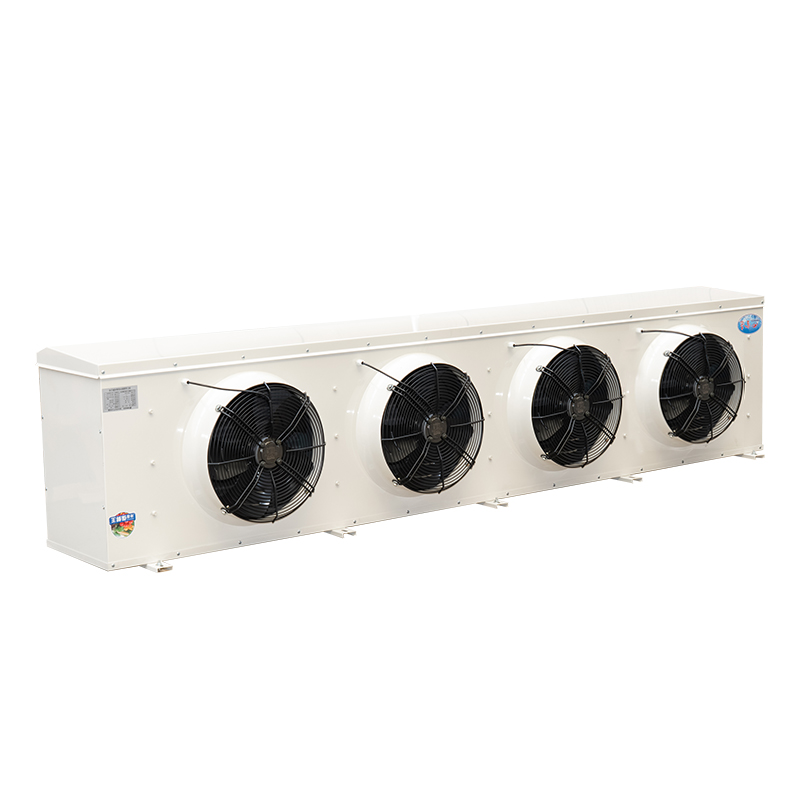 DD Type Medium Temperature Ceiling Air Cooler for Cold StorageDesigned for rooms around -18°C, this unit uses electric defrost and efficient coils. It suits small spaces with light frost and low defrost frequency, offering reliable, quiet operation for meat or fish storage.View Product →
The comprehensive guide to selecting the right air cooler evaporator explains how coil selection interacts with defrost frequency. For medium-temperature rooms with light frost, a DD-type air cooler is a common match. Keep in mind: electric defrost is a comfort-oriented choice, not an energy-efficient one.
Water Defrost: Fast Recovery for Large Coils and High Humidity
Water defrost wins when you need to clear a large coil quickly and you have a reliable water supply. The conclusion: it is the fastest method, but it trades energy efficiency for water consumption and drainage infrastructure.
Water is sprayed over the coil surface near the end of the defrost cycle. The water absorbs heat from the coil and melts the ice. This is why water defrost can finish in 10 to 15 minutes, with a temperature rise of less than 2 C. The energy used by the water pump is much lower than an electric heater, but the water does not disappear: it must be drained, and in some cases it should be recovered and treated. A poorly drained water defrost system can also re-freeze at the drain pan, causing a second defrost need. Water defrost systems also need a dedicated pump, a water collecting tray, and a drain line with a heated outlet. In many retrofits, that adds 15–20% to the mechanical installation cost.
Best fit: large ceiling-mounted or floor-standing coils, high-humidity rooms, fish or meat processing areas, and installations where water is already present and drain volume is not a constraint.
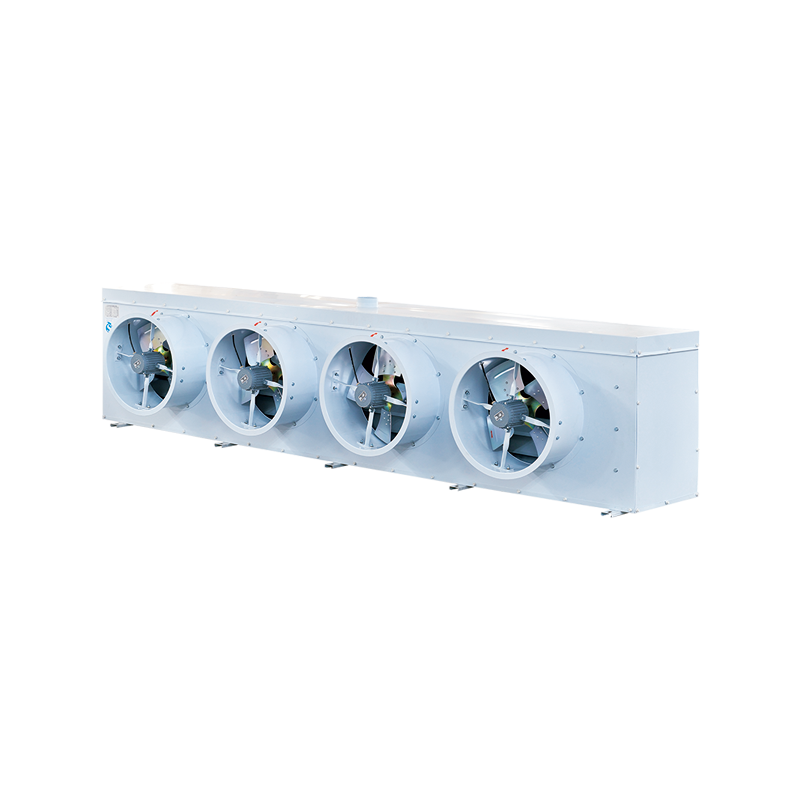 Water Defrost Air Cooler with Efficient Defrosting SystemThis air cooler uses water defrosting, ideal for high-humidity areas and locations with existing water supply. It minimizes downtime and suits installations where electric defrost is impractical or water is readily available.View Product →
- Shortest defrost time of the three methods.
- Minimal product temperature fluctuation.
- Lower direct energy cost than electric heating.
- Requires water supply and drainage system.
- Potential pan icing and water residue.
Hot Gas Defrost: The Energy-Efficient Standard for Low-Temperature Rooms
Hot gas defrost is the method of choice for low-temperature cold rooms and large industrial systems. The conclusion: it uses the heat already generated by the compressor, making it the most energy-efficient option by a wide margin, but it requires more valves, more piping, and a higher upfront investment.
Instead of an external heat source, hot refrigerant gas from the compressor discharge is routed into the evaporator coil. The gas condenses and gives up its latent heat, melting the frost from the inside out. Since the heat is recovered from the refrigeration cycle rather than bought from the grid, the per-cycle energy cost in a large unit can drop by 30% to 50% compared to electric defrost. The temperature rise is only 1 to 3 C, and the cycle lasts 30 to 45 minutes. The trade-off is complexity: you need an additional solenoid valve, a drain trap, and a control system to manage the gas flow, and you need enough load in the system to generate the gas pressure. Hot gas defrost is especially valuable in systems with parallel compressors and multiple evaporators. The defrosting unit can be isolated while the others continue to cool. In supermarket and wholesale cold storage installations, this often means two or three compressors can handle the same duty as four units with electric defrost.
Best fit: blast freezers, large cold storage rooms, systems with multiple coolers and parallel compressors, and sites where energy cost is high relative to capital cost.
 G Series Ceiling Air Cooler with High Efficiency and Custom OptionsFeaturing internal threaded copper tubes and hydrophilic fins, this series offers high heat transfer. It is built for blast freezers and large cold rooms, with customizable fin spacing and refrigerant options for demanding environments.View Product →
- Lowest energy cost per defrost cycle.
- Stable room temperature.
- Reduces refrigerant charge requirements compared to electric heating.
- Higher installation cost and engineering effort.
- Requires careful sizing to avoid liquid slugging.
Side-by-Side Comparison Table: Which Metric Matters in Your Cold Room?
When you compare the three methods side by side, the gap becomes clear. There is no universal winner; you are trading energy, time, and capital.
| Metric | Electric Defrost | Water Defrost | Hot Gas Defrost |
| Energy per cycle | 8.5 kWh | 2.0 kWh | 1.5 kWh |
| Defrost time | 30-60 min | 10-15 min | 30-45 min |
| Temperature rise | 5-8 C | <2 C | 1-3 C |
| System complexity | Low | Medium | High |
| Best fit | Small rooms, light frost | Large coils, high humidity | Low-temp rooms, tight tolerance |
Decision Framework: Match the Defrost Method to Your Cold Room Conditions
Follow this order: measure the frost load, then check your utility availability, then choose the lowest-cost method that holds your product temperature. The sequence below works for both new installations and retrofits.
- Record the coil surface area, room temperature, and daily defrost frequency.
- Estimate frost load from relative humidity, product moisture, and door opening frequency.
- Check if a water source and drain exist at the coil location.
- Compare local electricity price against water cost and capital budget.
- Select the simplest method that keeps the temperature swing inside your product tolerance.
Low temperature and tight tolerance
Hot gas defrost is the first choice. It recovers heat, keeps the room drift below 3 C, and reduces operating cost over the life of the system.
High humidity and fast recovery
Water defrost is the best fit. It clears the coil in 10-15 minutes and avoids the long temperature pull-down that follows electric heating.
For a medium-temperature room with intermittent door traffic and no existing water supply, electric defrost may still be the pragmatic choice. The aim is not to buy the most advanced method, but to eliminate the biggest operational risk.
FAQ: Defrost Method Selection Questions
The right defrost method depends on your frost load, utility availability, and product tolerance. Here are the questions we hear most from cold room operators and contractors.
Can I convert an electric defrost air cooler to hot gas later?
Yes, but not as a simple component swap. You need to add a hot gas solenoid valve, a drain pan heater, and possibly a suction line accumulator. The coil tube circuit must be sized for the gas flow. In most cases, a conversion is economical only when the compressor plant is already designed for it.
Does water defrost damage the fan motor or coil?
No, provided the water is clean and free of solids. The spray nozzles should be placed to avoid direct impact on the motor housing. Drain pans must be heated and sloped properly, otherwise water can re-freeze and reduce the effective defrost area.
How does hot gas defrost affect compressor life?
It can reduce compressor wear if the defrost sequence is controlled correctly. By using heat that would otherwise be rejected to the condenser, the compressor runs fewer hours for the same cooling duty. Poorly sequenced hot gas lines can cause liquid slugging, so a trained technician should set the timing.
What is the typical payback period for hot gas defrost?
For a cold storage room running more than 6 defrost cycles per day, the energy savings often cover the extra capital cost within 18 to 30 months. The payback shortens when electricity is expensive or when the room operates in a low-temperature range below -18 C.
Choosing among electric, water, and hot gas defrost air coolers is a cold room economics decision, not a popularity contest. Measure your frost load, know your utility costs, and keep your product tolerance in mind. The system that keeps your product at the right temperature with the lowest total cost is the right one.