


 English
 русский
A cold storage room held at -18 degrees C running a DL series high-temperature air cooler can lose as much as 30 percent of its evaporator capacity within two weeks as frost blocks the fin passages. The unit itself is not defective. The coil series is simply designed for the wrong temperature range. DD, DL, and DJ series air coolers look similar from a distance, but their fin pitch, defrost heater size, tube circuiting, and air throw are manufactured for three distinct cold storage environments. Selecting the right evaporator is not about picking the cheapest unit - it is about matching the coil to the room's design temperature and seeing the payoff in lower defrost frequency, stable product temperature, and a compressor that lasts years longer.
Content
- 1 What the DD, DL, and DJ Designations Actually Specify
- 2 DD vs DL vs DJ: Temperature Range and Coil Design Differences
- 3 Four Selection Criteria That Prevent Costly Mistakes
- 4 Energy Performance and Defrost Behavior Compared
- 5 Matching DD, DL, or DJ Series to Your Cold Storage Application
- 6 Frequently Asked Questions
What the DD, DL, and DJ Designations Actually Specify
The letters in the series name encode the design evaporating temperature range of the air cooler. DL stands for the high-temperature series, DD for the medium-temperature series, and DJ for the low-temperature series. The second letter defines the thermal envelope that everything else - fin pitch, defrost heater, fan motor, and drain pan - is built around.
DL series: high-temperature coil
DL series air coolers are rated for high-temperature applications in the range of 0 to +10 degrees C. The fin pitch is typically 4.5 mm, which maximizes heat transfer surface area per cubic meter of coil. At this tight spacing, frost does not accumulate rapidly because the tube surface temperature remains above the dew point of the surrounding air for most of the operating cycle.
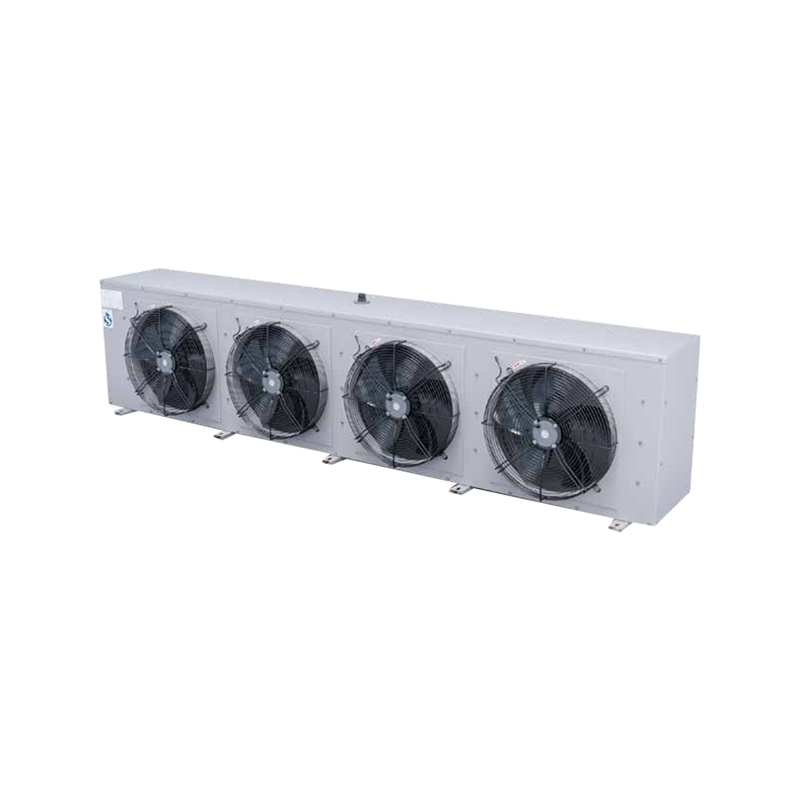 High-Temperature Ceiling Air Cooler for Fresh Food StorageDesigned for cold rooms around 0°C, this DL series unit is ideal for preserving fresh eggs and vegetables. Its tightly spaced fins and effective defrosting system ensure efficient cooling with minimal frost buildup, making it a reliable choice for commercial refrigeration.View Product →
DD series: medium-temperature coil
DD series air coolers are rated for medium-temperature applications from -18 to 0 degrees C. The fin pitch widens to approximately 6.0 mm to give frost a chance to grow without immediately blocking the airflow path. DD series is the most widely used choice in commercial refrigeration because it covers chilled food storage, meat processing rooms, and dairy cold rooms. HVAC engineers frequently reference the air cooler evaporator selection and maintenance guide when standardizing DD units for these conditions.
DJ series: low-temperature coil
DJ series air coolers are rated for low-temperature applications below -25 degrees C. Fin pitch increases to 9.0 mm or more, and the defrost heater wattage and drain pan size are significantly larger. Frost at -25 degrees C is more rigid and adheres more aggressively than at 0 degrees C, so the coil geometry needs wider passages to maintain airflow.
DD vs DL vs DJ: Temperature Range and Coil Design Differences
Use the comparison table below to see how the specification differences align side by side. The first row highlights the parameters that change most dramatically between series.
| Series | Design Temp | Fin Spacing | Defrost Type | Typical Application |
| DL | 0 to +10 degC | 4.5 mm | Electric | Produce storage, ripening rooms |
| DD | -18 to 0 degC | 6.0 mm | Electric or water | Chilled meat, dairy, beverage coolers |
| DJ | Below -25 degC | 9.0 mm | Electric or hot gas | Frozen warehousing, blast freezers |
The fin spacing difference is the most visible physical variation. A DL coil at 4.5 mm fin pitch offers roughly 40 percent more heat transfer surface area than a DJ coil of the same frame size. In a -20 degrees C room, that extra surface area works against you - the tight fin passages become blocked by frost just days after the first defrost. The DJ coil with 9.0 mm fin spacing keeps the air path open, allowing fewer defrost cycles and a more stable room temperature.
Four Selection Criteria That Prevent Costly Mistakes
Choose the air cooler series based on the room's design temperature first, then match the defrost method, refrigerant circuit, and airflow pattern to the coil. The four criteria below cover the decisions that cause the most field failures.
- Design room temperature setpoint. The primary driver. A room designed for -18 degrees C needs a DJ series coil. A DD coil may run, but the narrow 6.0 mm fin spacing will require more frequent defrosts and shorten compressor life.
- Defrost method compatibility. Electric defrost works across all ranges. Water defrost is common in large low-temperature rooms because water removes frost faster. Hot gas defrost is the most energy-efficient option for installations above 50 kW because it uses the heat of compression.
- Refrigerant type and expansion device. R404A, R507, and CO2 systems have different evaporator pressure drop characteristics. A coil designed for R404A may not perform identically with R507, so check the manufacturer's capacity ratings for your specific refrigerant.
- Air throw and room geometry. Ceiling-mounted units need enough air throw to reach the far corners of the room. A DD coil with a smaller fan may not provide adequate circulation in a large room, creating hot spots that compromise product safety.
When a medium-temperature room consistently sits at -18 degrees C, the correct response is not to upgrade to a DJ coil but to evaluate whether the room setpoint has drifted. If the room is genuinely medium-temperature, a 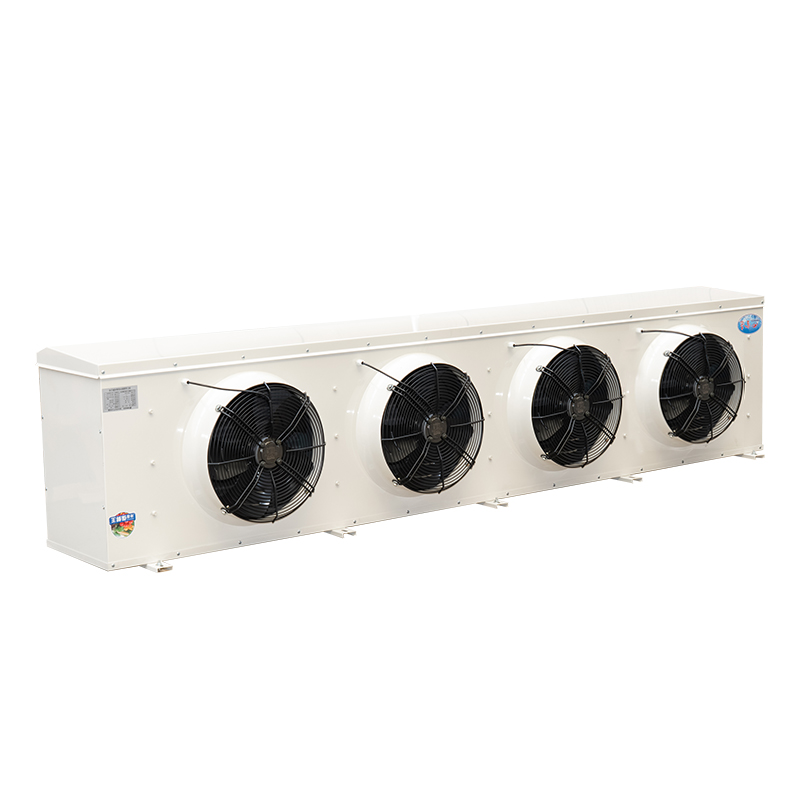 Medium-Temperature Ceiling Air Cooler for Frozen Food StorageEngineered for cold rooms near -18°C, this DD series air cooler is commonly used for meat, fish, and frozen foods. It features an integrated electric defrost system and a corrosion-resistant shell, providing stable performance and energy-efficient operation.View Product → remains the right choice.
Energy Performance and Defrost Behavior Compared
The energy performance of an air cooler is determined by the interaction between the coil's specific heat transfer area and the defrost schedule. A correctly matched series runs fewer defrost cycles per day, which means less heat enters the room and the compressor works less.
Even 1 mm of frost on a 4.5 mm fin pitch coil can block up to 40 percent of the air passages. Each defrost cycle raises the room temperature by 2 to 4 degrees C, adding latent heat that must be removed by the compressor. This is why the wrong series in the wrong room can double the energy consumption of the refrigeration system over a year.
Matching DD, DL, or DJ Series to Your Cold Storage Application
For produce storage and ripening rooms at 5 to 10 degrees C, use DL series. For chilled food, meat processing, and dairy rooms at -10 to 0 degrees C, use DD series. For frozen food warehouses and blast freezers below -18 degrees C, use DJ series. The application determines the required coil geometry, not the brand.
DL series applications
Fresh produce cold rooms at 5 to 10 degrees C, banana ripening rooms, flower storage, and cheese aging. The tight 4.5 mm fin pitch provides maximum heat exchange for high-temperature applications.
DD series applications
Meat processing rooms at 0 to -5 degrees C, dairy storage, beverage cooling rooms, and chilled distribution centers. The 6.0 mm fin pitch balances heat transfer with frost resistance.
DJ series applications
Frozen food warehousing at -18 to -25 degrees C, blast freezers, ice cream storage, and fish processing rooms. The wide 9.0 mm fin pitch and large defrost heater handle severe frost conditions.
For low-temperature warehouses operating below -18 degrees C, the DJ series is the default choice. Always verify the manufacturer's certified capacity data before finalizing a selection. For a deep dive into system-level evaporator design, the industrial refrigeration evaporator guide explains how coil selection affects the entire cold chain. A 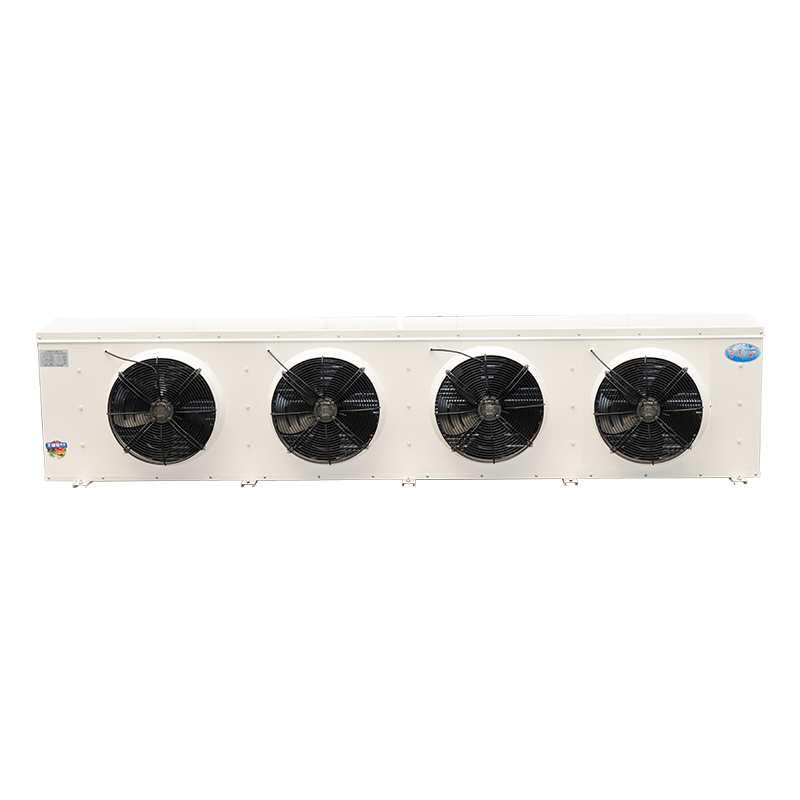 Low-Temperature Ceiling Air Cooler for Freezing ApplicationsSuitable for cold storage below -25°C, the DJ series air cooler is widely applied in frozen food and pharmaceutical storage. It incorporates wide fin spacing to reduce frost blockage and a powerful defrost heater, ensuring reliable cooling in harsh conditions.View Product → is the evaporator option most often specified for frozen food storage.
Frequently Asked Questions
Can I use a DD series air cooler for a -25 degrees C freezer?
No. DD series is designed for medium-temperature applications from -18 to 0 degrees C. At -25 degrees C, the 6.0 mm fin spacing is too narrow, and frost will block airflow quickly. DJ series with a wider 9.0 mm fin pitch and larger defrost heater is the correct choice.
What is the main difference between DL and DD series?
The fin spacing and design operating temperature. DL series uses approximately 4.5 mm fin spacing for high-temperature applications from 0 to +10 degrees C. DD series uses approximately 6.0 mm fin spacing for medium-temperature applications from -18 to 0 degrees C.
How does the defrost method affect air cooler selection?
Electric defrost is suitable for all temperature ranges but is less efficient in large low-temperature rooms. Water defrost works well for freezer rooms where frost forms heavily. Hot gas defrost is the most energy-efficient method because it recycles the heat of compression. Match the defrost method to the room size and frost load.
What happens if I select the wrong air cooler series?
The evaporator will either frost too quickly or run at reduced capacity. In practice, this increases compressor run time, raises energy consumption by 15 to 30 percent, and causes product temperature swings. A DL coil in a -18 degrees C room may need defrost every 6 to 8 hours, while a DJ coil operates for 12 to 24 hours between defrosts.